Life & relocation · July 30, 2025
Brutal Truth: Cost of Living in Northern Cyprus in 2025
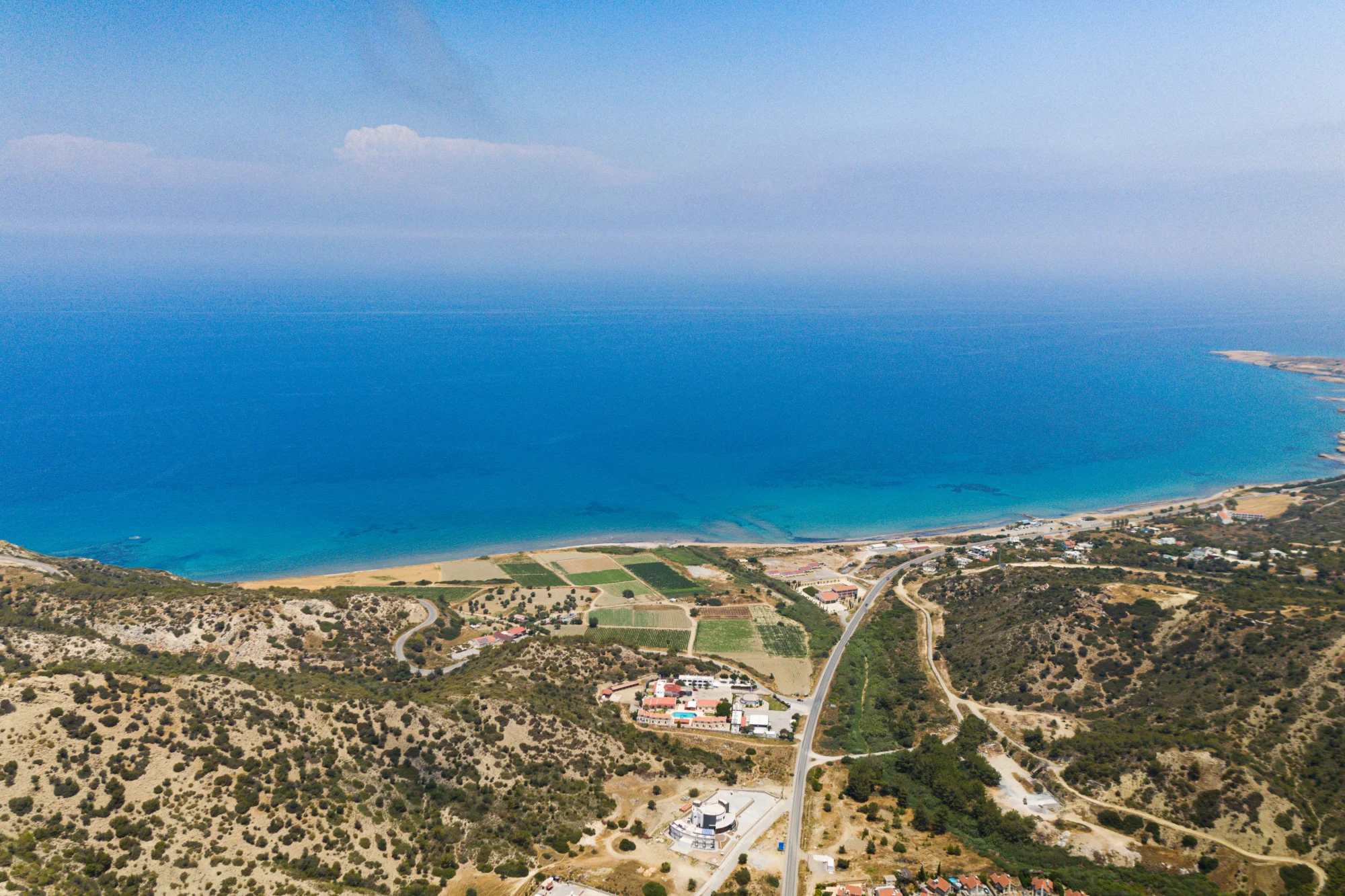
I provide a detailed breakdown of essential expenses, focusing on housing costs, utility expenditures, grocery prices, transportation, and healthcare. From the price range for purchasing or renting apartments to the costs associated with utilities and dining out, I give listeners a comprehensive view of what to expect financially. I also discuss the benefits of owning a vehicle in this region and delve into education costs for families. Ultimately, I aim to clarify whether a move to this picturesque island remains feasible and budget-friendly for those considering relocation in 2025.
Got questions? Call or message me on WhatsApp → https://wa.me/905391359676
https://t.me/Mediterraneandream
Today I'm going to break down all the costs associated with lifestyle here in Northern Cyprus. Um so that you can figure out for yourself whether it's a feasible strategy for you to relocate to this island in 2025 with still keeping your standards or maintaining your standards of life that you're having right now back in your home country. And of course I'm going to start with one of the most important topics which is housing and rent. So, that has not changed. We still have quite a bit of options of housing for those prices available. But what about rent? One-bedroom apartment can be rented anywhere from £400 to €600 per month.
And please bear in mind, my dear friends, that it's a long-term rental with a minimum uh term of six months to a year. Okay? And with a long-term rental, you would normally be expected to pay 2 months in advance. Uh leave two deposits and one commission for the agent. Two-bedroom apartment would cost you anywhere from €600 to €800 with the same terms and conditions being applicable for long-term rental. And I'm talking about the prices within the city infrastructure where there are schools nearby, hospitals, shops, you know, restaurants, etc. So, it's a city living type of lifestyle or it's in a very close proximity to the city center.
However, if you don't require any infrastructure nearby, if you don't have the kids that need to attend school and you are happy to live in a rural, very peaceful and quiet surrounding, in that case, you would be expected to pay anywhere from 15 to 30% less for your rental. Now, let's talk about utility bills that you would be expected to pay on a monthly basis. I'm going to start with water bill as the easiest one. Water bill would range anywhere from 10 to 15 per month depending on your property type. Maintenance is another fee that you would be expected to pay on a monthly base and it can range drastically in terms of the cost depending on the type of the complex and depending on the complex itself.
The average maintenance fee when you live within the complex would be somewhat €50. However, we also have complexes um a very modern ones like all inclusive type of resorts where the maintenance fee can exceed 200 per month. So bear that in mind, my dear friends. What about internet? You would ask me. Well, my dear friends, we live on the island and just like on any other islands, I would expect you know it's not the greatest coverage that we can have over here. But again, there are solutions. Of course, there are expensive options such as Stalink that you can acquire in here and get it installed.
And if your work is heavily depending on the internet connection, uh let's say you're a trader, then I would say Stalink would be the best option because it works without interruptions, you make enough money to actually cover those expenses, but I wouldn't be able to tell you exactly uh the cost of that equipment. Okay, that's something you will need to find out for yourself.
the regular internet options that we have in here is more than sufficient and enough uh for regular day life you know and I'm talking about work you know communicating with the clients over internet um watch movies for the kids to do the homework etc and that sort of internet it doesn't cost much uh the bill would vary anywhere from €10 to €20 depending on the provider depending on the location and um depending on the speed that you acquire and again if there are any interruption with the cable internet and you don't have the stling in that case I would always use a data on my mobile phone because the coverage is a lot better when it comes to a mobile network.
We have two main providers which is Turkl and Vodafone and they have somewhat similar quotes for the plan the payment plan that you have on a monthly base. The payment plan would range anywhere again from €10 to €20 depending on the data usage that you acquire. In my case scenario, I use a Turk cell provider and I acquire 100 gigabyte of data per month along with the minutes being provided for overseas call as well as the local calls. And let me tell you, that's more than enough to cover your basic living um requirements in terms of the internet usage as well as cover any interruption of the local cable that you might be having during the daytime in your working routine.
Last but not least is the electricity bill. And it's a very complex topic, but let me try and break it down for you. So the electricity here in Northern Cyprus is built using a tired pricing system. Meaning the more you consume, the higher the rate per kilow is. As a result, progressive electricity tariffs that can vary drastically depending on the size and the type of your property as well as the quality of the equipment or let's say air conditioning units you use to heat up or cool off your apartment or villa. During coldest months of winter, which are January and February, the regular temperature during daytime would range anywhere from + 15 to plus 20. If the sun is out, it would be closer to plus 20.
If the sun is not out, it would be closer to + 15. Okay? So, you wouldn't really require any heating equipment to be used uh during the daytime. Whereas during night time, the temperature goes down to anywhere from plus 7 to + 10. That's most likely the time that you would require some sort of heating system to be active, right? for you to stay warm uh within your property. And there are two months during summer time that you cannot imagine yourself living without use of air conditioning. Okay? And those months are July and August. And if you're staying indoors, daytime, nighttime, nighttime, I mean, if there is a little bit of wind, you can skip the air conditioning and just can leave the windows open.
But during daytime, my dear friends, if you're staying indoors, air conditioning is a must because you're not going to survive otherwise. You would be heavily relying on air conditioning or any other heating system only four months a year. The rest eight months of the year, you would not require any heating system or any cooling system because it's cool enough to stay cool and it's warm enough to stay warm. And as we all know, the heaviest consumption of electricity lies on the heating system and cooling system, right?
So if you don't use those uh of course your bill for electricity is going to be extremely low because let's say based on my case scenario and trust me I'm that kind of person I don't economical electricity and I use every single appliance possible in this life to ease my workload on a daily routine. So for 8 months a year my electricity bill does not exceed a,000 Turkish liter per month which is €20 for you. Whereas during winter time, the coldest month of the year of January and February and hottest months of summer, July and August, my bill ends up being roughly about 3,000 Turkish L, which is €60 for you. And again, I'm talking about twobedroom apartment, okay?
Two-bedroom apartment, 8 months of the year, you would roughly pay €20 per month. Four months of the year, your bill would not exceed €60 per month. But things are very different when it comes to villas. And believe me, I've seen different types of bill anywhere from €200 going all the way up to €1,000 per month. And let me explain you why. Well, first of all, it heavily depends on what kind of equipment, heating or cooling equipment a villa has and the size of the villa, of course, because we can be talking about three bedroomedroom, one-story bungalow of 150 square meters and we can be talking about a mansion of three story with like seven bedrooms in it.
Of course, the electricity bill is going to be very different. One thing to note my dear friends, it's a very pointless task to heat up or cool off a big villa with the use of old type of air conditioning units. You know those ones that were produced like 10 to 15 years ago. They are not efficient. First of all, they consume electricity like a plane. So much of it that your bill can exceed actually €800 if you use those. In turns, um you know, it's better to acquire a modern type of equipment. I'm talking about inverted type of air conditioning with AAA plus++++ that is being produced today.
They're not I mean it's a heavy expense to buy them but at the same time it's going to econom you a lot of electricity and it's very efficient when it comes to consumption. So if it's a bungalow of up to I don't know 150 square mters let's say and you acquire a modern type of air conditioning which is inverter air conditioning you know that it will be more than sufficient and you might end up paying maybe €100 or €150 right just having air conditioning whether it's cooling or heating any modern villa nowadays will have the under floor infrastructure in place with the connection to the gas tank as well as the radiators across the house with connection to the gas tank as well.
I mean it can be one or another or it can be both together again depending on the size of your villa that economs a lot of money because gas is very inexpensive in here. Whereas during summertime the bigger your property is the less cooling it requires because um that sort of property doesn't heat up as easily by the sun. Whereas during winter time if you have the modern infrastructure in place your bill would range anywhere from 300 to€500 depending again on the size of the property and how modern the equipment is. So enough of the bills. That's pretty much everything that you need to pay. In total, it would come up to anywhere from €100 to €200.
Of course, depending on the complex, depending on the type of the property, but in my case, I don't pay more than €100 per month if we take on the average for the whole year. Now, let's talk about groceries and daily essentials. One thing that I'm going to uh draw the attention to, my dear friends, is we live on the island, okay? And aside of the fact that it's not a recognized country and of course if we get anything important from a third country it gets double taxed. Why? Because uh we get all the imports via Turkey. So there is a custom duty tax that's applied in Turkey and there is a custom duty tax that's supplied in Northern Cyprus.
That's one thing to note because some of the things might seem very expensive over here. But again, if you have the opportunity to go to the south, you can always acquire any essentials that you might need in terms of medication or whether it's any sanitary type of product, you can always acquire them on the south. So, same thing applies to food. If we get any food imported from other countries via Turkey, of course, it's going to be slightly more expensive than on the mainland. So, that's one of the reasons why me and my son were a family of two.
So I try to eat seasonal over here because you see all the greens, vegetables and fruits they are produced I mean not all of them of course but they are produced here in northern Cyprus and let me tell you this aside of the fact that it's summer all year round right you would just think that there is no seasonal terms no my dear there are because there are hottest months of the summer when plants uh require a lot more watering because the sun is very strong okay and once plants require more watering they will come at a heavier cost meaning that it's going to be high in price once it uh in a grocery shop.
In here, you can actually find yourself in a situation where one day you go to a shop and you see a price for cucumbers being 5 Turkish liter, which is a few cents, right? On another day, the price might exceed 100 Turkish LRA, which is €25. I mean, we've seen potatoes price being up to 150 Turkish LRA, which is €3, 32. But then again, uh the government has put the restriction on the price level and now it does not exceed€1. most of the time is 40 Turkish liter. Let's say in my case scenario, we're a family of two, me and my son. And as I said, we try to eat seasonal and we try to eat healthy. So grains, they would never cost you a lot of money. They're always cheap.
When it comes to pasta as well, same thing as overseas. When it comes to vegetables and fruits and greens, you know, we try to eat seasonal. You just adapt to the menu to whatever is season for particularly today. Let's say if watermelon, it's if it's a watermelon season, we will eat watermelons because the price would never exceed €1. If it's a season for strawberries, we would eat plenty of strawberries because a kilo of strawberries would cost you one euro as well. So if we talk about general products like eggs or meats or milk, you know, prices somewhat stay the same. So let's say one liter of milk which is free of pesticides and preservatives will cost you roughly €1.
Basket of 30 eggs would cost you roughly €3. The most expensive product in here I would say is the lean beef meat. The price for that per kilo would be roughly €15. Okay, that's a very expensive price comparing to the European type of countries, but again, you know, it is what it is. Fishing and farming is something that's very popular over here, too. And of course, we've got fish accessible to you. And if you go to the market on Saturdays, you can acquire fish a lot cheaper in price comparing to the grocery shops uh type of prices. So let's say a dorado like a big one would cost you at the market would cost you roughly about 300 Turkish la per kilo which is €6 whereas in the shop it will be a double price.
Same thing applies to king prawns or salmon or any other fish or sea products that you might want to buy. So let's say king prawns in the market shop would cost you roughly 400 Turkish liter which is €8. Whereas in the shop of course it's going to be double priced. We've got a production of chicken meat in here. And of course, chicken would cost you somewhere the same like it is compared to Europe. One kilo of chicken breast would roughly cost you 200 Turkish lur, which is €4. So what I would like to say in conclusion, my dear friends, we as a family of two, me and my son, we roughly spend a€,000 per month on our grocery shopping and daily essentials.
And as I said, we don't econom, but we try to eat seasonal and healthy. What about dining out? Well, dining out used to be very, very cheap in here back in the days. I would say four to 5 years ago, I mean, you could dine in a restaurant for €5, but not not anymore. Nowadays, an average bill that you would be expected to pay per person would range anywhere from €15 to €25, okay, for a decent very good restaurant with a good service with an amazing food. I would say me and my son, we go out at least once a week and the average bele would be anywhere from €40 to €50 uh for both of us. But again, certain regions cost a lot less when it comes to dying.
So if we take regions for instance as kosha or guilan the average price uh per person to dine out would be at least 30% cheaper. It doesn't reflect on the quality of food or quality of service not at all. It's just that regions where a majority of the local population lives. Okay. And because of that I guess the prices are somewhat lower by 30% at least comparing to the regions like east kila or gir or even the center itself. What about transportation you'd ask me? Well, I've mentioned before quite a few times that public transport is practically non-existent here in Northern Cypress. Of course, we do not have trains.
We do not have uh big buses unless it's buses going from merits, you know, taking the workers in and out. We have vans that are accessible to the public in the major cities such as Nikosia or Gir or Famagusta itself, right? Are they cheap? Yes, they are cheap. You would be expected to pay anywhere from 40 to 50 Turkish Lo, which is equivalent to one viewer for a journey. But are they convenient? No, they're not convenient. There's no air conditioning. They're not consistent. There are no timets. You just wait on the road, you know, until it passes by. And trust me, not every single time it has to stop if you're standing there. So, I would not rely on the public transport. I would get myself a car.
Cars are very inexpensive in here, especially when it comes to secondhand cars. Okay? You can get yourself a decent Toyota for anywhere from 6 to£7,000. And trust me, that's going to save you a lot of money because if you uh acquire rental of the car, the rental of the car would roughly cost you €500 per month on a long-term basis, which is a very hefty expense per year. So, I would say it's better you get a car if you decide to relocate in here permanently or temporary. So, what about expenses when it comes to having your own car? So, let's say gas is very cheap over here. It's equivalent to $1 per liter.
So me having to travel a lot across the island due to my workload, I fill up my gas tank about once per week, the total cost of that comes up to about €140 per month. That's in my case. In your case scenario, things might be very different because the distances if you live without within one region are very short. Let's let's say from my house to a school where I'm taking my son to is only 3 and a half kilometers. from me to the city center of Gir is only 15 kilometers. Wherever I go, I don't spend too much time getting to the final destination. So again, we econom on the amount of petrol that we use in here just because we're having short distances from point A to point B.
Car insurance is something that's very inexpensive over here. So, let's say in my case, I have Mazda CX3 uh SUV of 2019 and I pay last time I paid only €85 per year for one-sided coverage for my car insurance. There is also road tax that you would be expected to pay. Road tax would roughly come up to €7 per year and a periodical vehicle technical inspection that you have to undergo once per 3 years and the cost of it is roughly €80 as well. So to conclude my dear friends, let's say in my case scenario when I use a lot of gas because I travel a lot, I end up paying €150 per month on my car expenses and travel expenses, healthcare and insurance, my dear friends. So let me tell you about the quality of it.
The quality of it is very decent. We have a lot of private clinics and hospitals. Okay. And just like the same way it works in Turkey, you know that a lot of Europeans go to Turkey to conduct some sort of procedures whether it's hair transplantation or maybe any surgery um or maybe dental services. So same thing is very rapidly developing over here and we've got plenty of services being provided as a private healthcare. But what about the prices? Okay, let me try to break it down for you. First of all, there is a compulsory health insurance that you pay for every single time you apply for your residency and it's equivalent to €50.
So it's not a heavy hefty expense but again it doesn't give you the access to the private clinics. It's only the public hospitals in case of emergency. What about private health insurance you would ask me? Let me break it down. So once it comes to private health insurance we've got basic coverage and we've got comprehensive coverage. Okay the basic coverage I mean it includes regular services and emergencies. If you are a young individual up to 30 years of age you would roughly be expected to pay up to €350 per year. If you're middle-aged individual up to like let's say 50 years of age, you would be expected to pay up to €500 per year. And if you are older than that, the price goes up to €800 per year.
And that's a basic plan coverage. Whereas comprehensive plan, that includes any type of surgeries that you might require or maybe dental services would cost you quite a bit more. So for young individuals, the price goes up to €600 per year. For the middle-aged one up to 50 years of age, it goes to €800 per year. And for over 50 years of age, you would be expected to pay roughly €1,200 per year. In case you are a young individual and you don't have any concerns when it comes to your health, I mean, you don't have to acquire a private health insurance here in Northern Cypress.
In case you don't acquire private health insurance and you are in need of the services, let me give you a little bit of the pricing points. Let's say if you decide to go and undergo a full medication, body check including X-rays, cancer screening, various analysis and tests to be done, ultrasound and heart screening. The whole package would roughly cost you anywhere from €350 to €400 depending on the clinic. Dental services are very accessible over here comparing to Europe. I mean if you go to a clinic and you uh require one or two tooth to be fixed um with a filling let's say you would be expected to pay anywhere from €50 to €100. And another example that I can give you is recently I had one surgery.
It was a minor surgery but still I had to stay within the hospital for 12 hours and it was a general anesthesia that I had to undergo along with all the tests being done prior and after and after checkup and things like that and staying within the hospital. I've paid €1,000 my dear friends. Now let's move on to costs that associated with children in case you have any. Well the heftiest expense that I do have to bear is actually my son's education. You see, we have British schools in here in Northern Cypress, right? But the cost of them has gone up drastically in the last few years. Let's say when we first came, I only paid £4,000 per anum.
Whereas right now, for the upcoming year, I would be expected to pay £8,000 for his seventh grade. So equivalent of that would roughly come up to £950 per month per child of school fees. That's in case if you decide to acquire British education. Although we do have other options. We have uh local municipality schools that are free of charge if you're a resident, but the lessons are taught in Turkish in a local language and your kid will have to take the test to prove that he or she has a certain level of Turkish language to be able to attend that school.
Aside of the public Turkish education, we also have Turkish private schooling options and they're somewhat a little bit cheaper than the British ones, I would say, but still you would be expected to pay roughly £7,000 perom. But other options you might consider if that cost is too heavy for you is the online options because I mean we live in a digital world right now and there are plenty of school options available online in different languages that are very accessible in terms of the cost. You would be expected to pay anywhere from 1,000 to €3,000 perom attending online classes per year my dear friends depending on what school it is.
In addition to the school fees I bear some little extra expenses because we attend extra classes. So when it comes to my son again as an example, he does go for football classes um four times a week and I pay €100 per month. He also attends extra math classes twice per week and the amount I have to pay comes up to €8 per month plus we go to volleyball three times a week and that cost us only €20 per month again. So all in all extra expenses for extra classes I end up paying roughly about €200 per month on the top of the school fees. Extra activities in terms of leisures such as cinema, trampolines, lazert or any other games would normally not cost more than €10 per session.
And of course, we turn those like once per week also. So if you have children, bear in mind that you might end up spending up to €1,200 per kid in here if you don't econom on the activities or the schooling fees. When it comes to me, uh I'm not that expensive as my son is. So I do enjoy extra things like subboarding you know any water activities but I have the equipment so I don't have to pay for it. The only thing that I have to pay for is the yoga classes and uh the price of that is €60 for two classes per week. So to conclude my dear friends let me give you a quick brief summary on what has been said.
So, as a home owner having my son and having to pay for his British education, I end up spending roughly about €2,750 per month. That's for two of us on all the daily essentials and bills and everything else like that. In case you're renting an apartment, your daily living expenses would be increased by roughly €700 to 800 and will come up to somewhere around €3,000 per month. In case you don't have any children and you don't need to spend on the cost associated with children, in that case scenario, if you own your own apartment, you would be very well off with having €1,500 in your pocket for two people living within one household.
Whereas, if you don't own a property, you would probably end up spending anywhere from €2,000 to €2,300 per month if you need to rent a place. That's pretty much all, my dear friends. I hope this information helps you understand the current situation and determine whether relocating over here is something that is feasible for you with the current level of income. If you do have any specific inquiries, do not hesitate to contact me directly. I will see you soon.