News & change · May 3, 2026
North Cyprus News April 2026
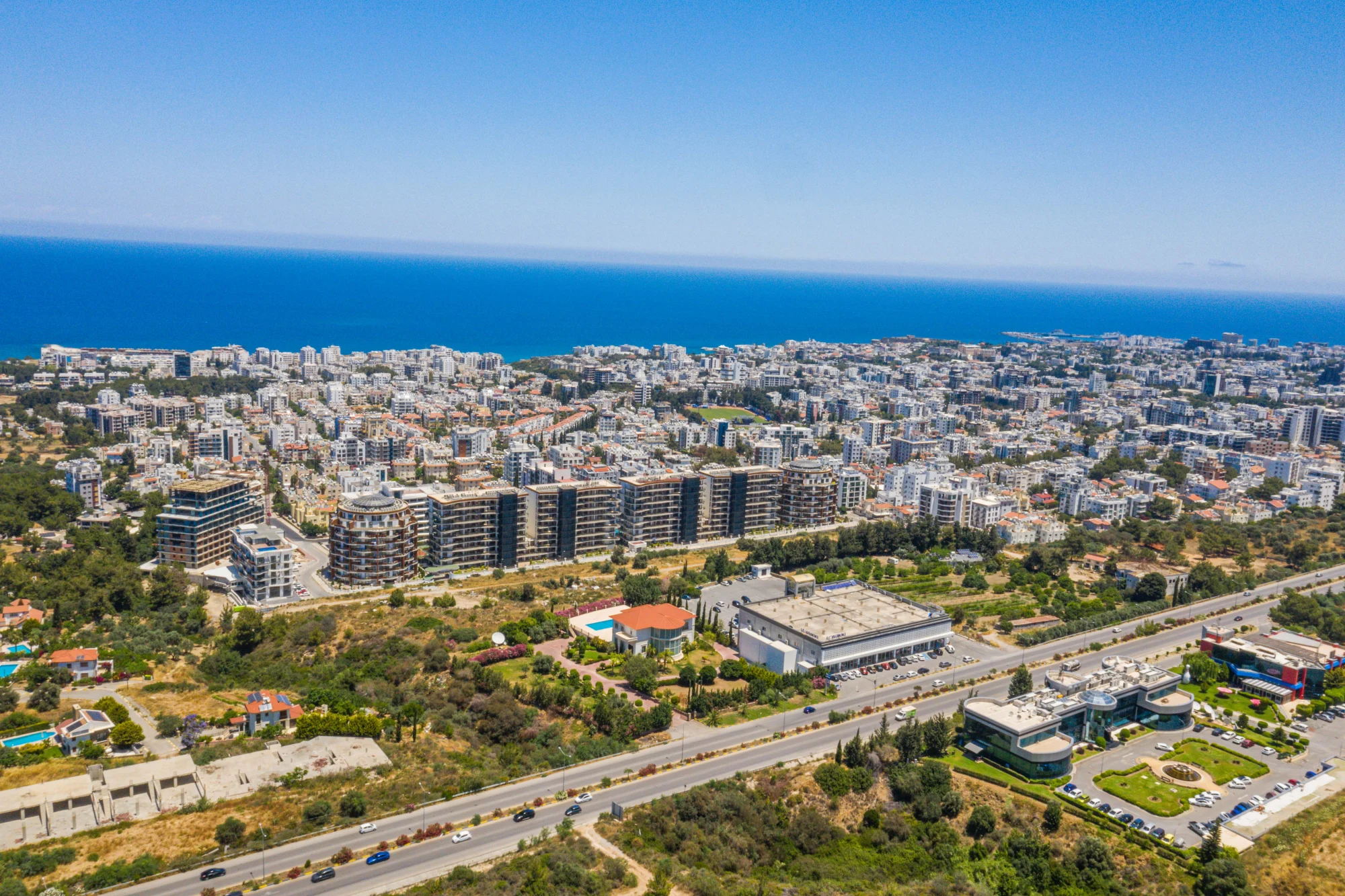
April in Northern Cyprus was anything but boring.
Protests, rising prices, migration amnesty, airport changes, food inspections, tourism campaigns, political tension, and the usual island-level chaos - all packed into one news update.
📩 DM me today for a FREE consultation:
✅ +90 539 135 96 76
📲 WhatsApp: https://wa.me/905391359676
Today, let's go through the main stories of April in Northern Cyprus in a simple, clear, and slightly sarcastic way because honestly, with some of these stories, a little sarcasm is not optional. It is an emotional self-defense. We started the month with something positive and actually quite symbolic. Across Northern Cyprus, a large environmental campaign called Yeniden Yeşil Kıbrıs, meaning green Cyprus again, took place under the presidency initiative. Saplings were planted at 27 different locations across 18 municipalities with the participation of schools, municipalities themselves, ministries, and forestry department, as well as thousands of residents.
More than 7,000 people were expected to take part, and even those who had not registered in advance were invited to join. And honestly, this was one of the better stories of the month about Northern Cyprus because the island really does transform between winter and summer. In winter, the island is green, fresh, and full of life, whereas in the summer, it turns into something between golden Mediterranean beauty and a very well-baked biscuit. So, every little tree planted here genuinely matters. And speaking of the environment, April also reminded us that greenery is not only about planting trees, but also about protecting what is already growing.
The island looked much greener this spring after strong winter rains, and satellite images reportedly showed a visible differences comparing to the previous year. It was one of those small reminders that Cyprus still has the seasonal magic. But, while nature was doing its best, agriculture had a less romantic moment in April in Northern Cyprus. The Department of Agriculture carried out a weekly food inspections with some local products, including peppers, cucumbers, and tomatoes, were found to have pesticides level above permitted limits. Imported samples were reportedly clean, while several local products had to be destroyed or held back from harvest.
Still, the positive side is that the inspections were carried out. Names were published, and unsafe products were removed. From food safety, April moved very quickly into money because in Northern Cyprus, every peaceful conversation eventually finds its way to inflation. Prime Minister Ünal Üstel discussed the expected economic and financial protocol with Turkey, which was expected to bring around 25 billion Turkish Lira in financial support to Northern Cyprus. The protocol was expected to be signed in Ankara, and the government said the funds would be used to ease economic pressure and support necessary areas.
The key phrasing here, of course, is necessary areas because in Northern Cyprus, that can mean many things from salaries to infrastructure to electricity, roads, fuel, or public services, or simply keeping the system breathing for another few months. The government also said it was trying to avoid immediate increases in fuel and electricity prices, including by considering tax adjustments. And this led directly into one of the biggest stories of the month, the cost of living adjustment crisis and the protests. The government had proposed a model where part of the inflation-related salary increase would be paid immediately, while the remaining part would be postponed and paid later by January 2027.
The unions rejected the proposal, and the issue quickly became much bigger than just salary calculations. At first, it was about inflation compensation. Then it became about trust. Then it became about early elections, resignation demands, and frustration with the general direction of the country. In other words, it went from "Can we discuss the wages?" to "Maybe the whole government should leave." A very Northern Cyprus escalation. There was even a rather theatrical moment when unions reportedly planned to meet Prime Minister Üstel at the airport after his return from Azerbaijan. But, he arrived much earlier than expected, around 5:00 a.m. in the morning, so the protest missed its main character.
The planned airport welcome turned into one of those events where everyone prepared for drama, but the lead actor had already left the stage. The protest then continued in front of the parliament and later near the Prime Minister office. The slogans became more political with demonstrators calling for the government to resign. At one point, a coffin with a message aimed at the Prime Minister was brought to the protest, which showed just how heated the atmosphere has become. The government eventually withdrew the earlier decree and announced a new model. Under that model, salaries would be recalculated after the June inflation figure.
50% of the increase would be paid immediately, and the rest would be postponed until no later than January of 2027. Salaries up to 75,000 Turkish Lira were said to be protected from reduction as well. But, the unions made it clear that protests would not necessarily stop just because a new law was passed through. And that was the real story here. It was not about the numbers on the payslips. It was about people feeling that their purchasing power was being squeezed while every solution sounded temporary, technical, and not particularly comforting. While all of this was happening, the Central Bank also raised several interest rates.
The rate on Turkish Lira deposit accounts increased from 32.5 to 35.5, basically by 3%. While other rediscount and advance rates also went up. For savers, high deposit rates might sound attractive, but when inflation is also running fast, a high interest rate is not always a profit. Sometimes, it's just a financial umbrella in a storm. Useful, but you are still getting wet. At Ercan Airport, authorities announced new measures to reduce traffic chaos around arrivals area before the summer season starts. Buses, minibuses, and commercial vehicles were to be redirected through the parking area, while taxis would be regulated more strictly depending on the demand during the season.
This was much needed because for many tourists, Ercan is the first impression of Northern Cyprus, and the first impression, ideally, should be "Welcome to the island." Not "Welcome to the luggage-based traffic experiment." The airport also brought some positive financial news to the market. The company that's operating Ercan Airport paid more than 385 million Turkish Lira to the state from turnover for the first 3 months of 2026. That is a serious contribution to the budget.
But, as always, people will naturally ask, "If the airport is generating this kind of revenue, when will the passenger experience fully match the numbers?" Another practical transport story came from Güzelyurt, where municipality signed a contract to launch an electrical bicycle system. Around 100 e-bikes were planned for the first stage, and this was a good step towards alternative transport. Although, of course, bikes need safe infrastructure. Putting e-bikes into traffic without proper lanes can feel less like urban innovation and more like a personal courage test.
Talking of mobility, a parliamentary committee also approved changes to the agreements between Turkey and the TRNC on mutual recognition of driving licenses. If fully approved, the system should simplify license recognition and exchange between the two countries. Not the most dramatic news of the month, of course, but very useful because any reduction in bureaucracy deserves a small round of applause. And speaking of bureaucracy, April also brought a major migration story. Northern Cyprus prepared migration amnesty for foreigners who were in the country without valid legal status.
The proposed system gave people 45 days to apply and 60 days to legalize their stay after paying an amount equal to one minimal wage. The Interior Minister clarified that the amnesty was not intended for people involved in criminal offenses, but for those who had violated residence rules and were living outside the official system. This was important because many people fall out of legal status here, not because they are criminals, but because of student issues, expired permits, job changes, family situation, or confusion around procedures. If managed clearly, this could help bring many people out of the gray zone.
While the country was dealing with economic and legal issues, tourism promotion also had a glamorous moment. Turkish Airlines run a promotional campaign for Northern Cyprus in several European countries including Germany, Austria, Poland, the Netherlands, and Romania. Featuring Turkish-German actress Meryem Uzerli, known for her role as Hürrem Sultan in Magnificent Century. From a marketing point of view, this was a smart move. She's recognizable, elegant, and well-known to European and Turkish-speaking audience. Northern Cyprus still has a visibility problem internationally, so campaigns like that can help position the island better as a tourism and lifestyle destination.
But of course, promotion is only one side of the story. If we advertise paradise, the infrastructure has to support the promise. Tourists may come to the sea view, but they also remember the roads, the airport, and the services, as well as the electricity and how easy or difficult the experience felt. On a more cultural note, April also brought the start of the 21st International Bellapais Spring Music Festival, which is running from the 11th of April to 14th of May at Bellapais Abbey. The program includes 12 concerts and 125 artists from Cyprus, Turkey, Russia, Luxembourg, and Bosnia and Herzegovina. Bellapais is one of those places where Northern Cyprus does not need much explanation.
Stone walls, mountain air, live music, spring evenings, all of it sells itself. No aggressive marketing needed here, that's for sure. No limited offers, just the atmosphere. And culture continued with the local gastronomy as well. In Guzelyurt, chefs presented dishes based on artichokes just as the season reached its peak. Artichoke is one of those products that connect food, agriculture, and local identity. And events like this may seem small, but they matter because they promote local producers, seasonal food, and food tourism. The same seasonal feeling appeared in April with green almonds.
On Cyprus, young green almonds are eaten fresh, sometimes from the tree, often dipped in salt, and the season is very short for it. It is one of those small local traditions that tell you that spring has already arrived, and it's not just about the food, it's about the rhythm of island life. But April was not only about culture and food, it also included public health and municipal preparation for summer. Iskele Municipality begun insect control work before the hot season begins, targeting mosquitoes, flies, and cockroaches across the center and 21 villages. They focused on standing water, drainage areas, and larvae control.
Anyone who has spent a summer evening in Cyprus definitely knows that this is not a minor issue. Mosquitoes here do not simply bite, they behave like they have a legal ownership over your ankles. So yes, early preventions do matter. In agriculture, there was also an interesting environmental story. Northern Cyprus released predator insects to fight the cactus pest affecting babutsa plants. The pest had reportedly damaged a huge percentage of local plantations, and chemical methods had not worked well. So the new approach focused on biological control instead of more chemicals. This was actually one of the smartest stories of the month, using nature to rebalance nature.
Not every solution has to come in a plastic container with a warning label. Politically, President Ersin Tatar gave one of the more direct statements of the month. He said he was not satisfied with the general state of the country, and that many things needed to be rebuilt. He spoke about problems in institutions, social media restrictions, entry bans to Turkey affecting Turkish Cypriots, and the Cyprus issue itself. That statement resonated because many people feel the same way. Not because they dislike the country, but because they see its potential and feel frustrated by the existing system, economic pressure, and constant political instability.
The Cyprus issue also returned to the agenda through a panel discussion in Larnaca, where participants from both communities discussed the current situation and possible paths forward. As always with Cyprus, there was talk of renewed momentum, and as always with Cyprus, optimism had to wear a seatbelt. On a wider diplomatic front, the European Union also sent a message to Turkey, saying that it wanted stronger relations with Turkey, but expected concrete steps, including on Cyprus. This again showed how the Cyprus issue is not only local. It sits inside the bigger relationship between Turkey and the European Union.
Another important, but maybe less dramatic development in April was the opening of the new weather forecasting center in Lefkosa under the Meteorological Service. Local reports also mentioned that around 70 million Turkish Lira had been invested in meteorological infrastructure over the last 2 years, with early warning systems planned as part of the next stage. And this may sound like one of those technical government stories, but actually, my friends, it matters because weather forecasting in Cyprus was no longer just about whether we need an umbrella. It was about floods, sudden heavy rainfalls, agriculture, fires, heat waves, road safety, water reserves, and of course tourism.
Anyone who has lived here long enough knows that weather can go from a beautiful Mediterranean morning to why is my street suddenly turns into a river very quickly. So better forecasting and early warning systems were not just nice upgrades, they were basic infrastructure. And from infrastructure, the conversation naturally moves to trade and the bigger Cyprus picture. In April, the Turkish Cypriot Chamber of Commerce reported that trade across the green line had fallen to around 13.9 million Euros in 2025, down from 15.1 million Euros in 2024, which was about an 8% drop. On paper, this sounded like a dry economic statistics, but in Cyprus, even trade numbers carry political meaning.
The green line is not just a border or a checkpoint system. It is one of the few practical channels where the two communities still interact through real economical activity. It does not solve the Cyprus problem, and of course if it did, we would have solved it with the invoices by now. But it shows that cooperation is still possible in small practical ways through goods, logistics, businesses, and people actually working with each other instead of only waiting for another official negotiation round. And this brought us back to the bigger historical reality of the island.
April also had a more reflective moment after a post about rereading a book on Cyprus and looking again at how the situation developed through the lens of Greece's intervention and the attempt to Hellenize the island. This is of course a very sensitive subject. Cyprus history is not something that you can explain in one sentence without offending at least three people and accidentally starting a debate in the comments. The island's division followed the Greece-backed coups in 1974 and Turkey's military intervention, and the decades later, Cyprus still remain divided with repeated UN-backed reunification efforts failing to produce a lasting settlement.
But the important point is this, if you live in Cyprus, invest here, move here, or speak publicly about the island, you cannot understand it only through the beaches, property prices, and holiday home brochures. You need historical context. You need to understand why the island is divided, why property issues are so sensitive, why recognition matters, why people on both sides carry very different memories, and why even the simple topic can suddenly become political. Cyprus is not just a sunny island with nice views. It is a layered political reality.
And sometimes, one book opens the door, but the serious work is reading more than just one side of the story because the island already has enough people with loud opinions and very little context. And then, after all the serious stories, April still gave us a few classic island moments. At Girne Port, two men were detained after allegedly trying to bring in undeclared goods, including 32 pairs of shoes, and a popcorn machine, and a food products. I'm not saying it was one of the strangest business plan of the month, but 32 pairs of shoes and a popcorn machine definitely raised questions. Were they opening a cinema, a shoe shop, or a very specific party? We may never know.
And finally, in Taskent Koi, a driver managed to drive a Mercedes straight into the glass front of a gym. Thankfully, nobody was seriously hurt, but the car, the window, and probably the driver's dignity had a very difficult day. It was described almost like an accidental open-plan renovation. The gym wanted visibility. The Mercedes delivered it directly through the front glass. So, that was April in Northern Cyprus, a month of protests, salary festivals, migration amnesty, food inspections, youth diplomacy, and one very confused Mercedes. And if there is one thing this month showed, it is that Northern Cyprus is never just one thing. This is why I always say, Northern Cyprus is not just a postcard.
It is a real place. And if you live here, invest here, plan to move here, or simply follow the island, you need to understand both sides, the sea views and the systems behind them. The festivals and the inflation, the green almonds and the government protests. The lifestyle dream and the practical reality. That is the real Northern Cyprus.