News & change · August 3, 2026
North Cyprus News July 2026
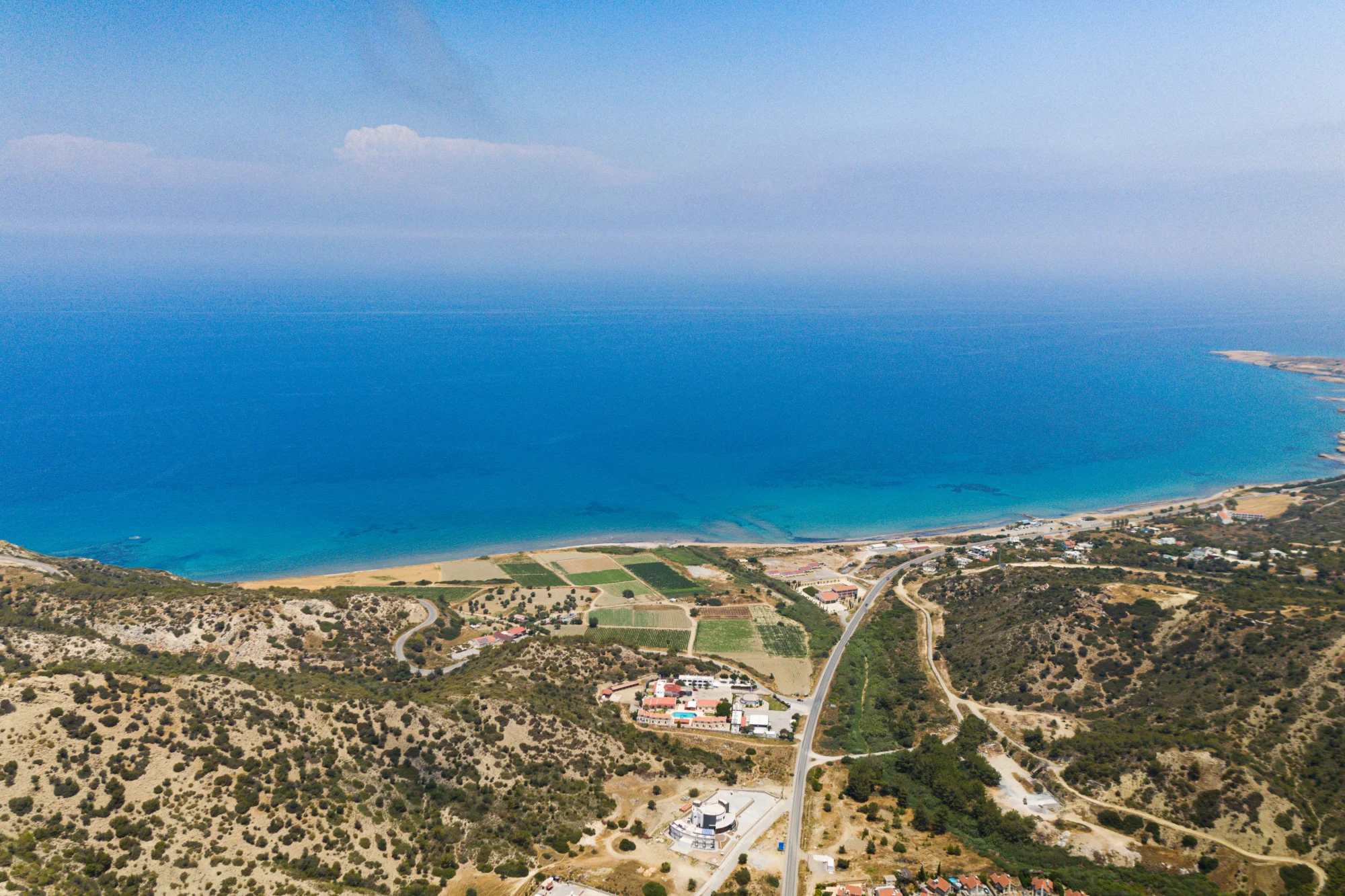
Every month, I bring you the good, the bad, and the occasionally unbelievable developments shaping life on the island. Beyond the sea views and sunshine, I show you what’s really happening on the ground - so you understand not only how North Cyprus looks, but what it’s actually like to live here.
I also help people navigate the North Cyprus property market with clarity and confidence. My mission is to make the buying process smooth, straightforward, and secure - while helping you avoid the expensive mistakes this market is very good at hiding.
Thinking about buying or relocating? Send me a DM. Ideally before your deposit develops a life of its own.
📩 DM me today for a FREE consultation:
✅ +90 539 135 96 76
📲 WhatsApp: https://wa.me/905391359676
https://maria-vasileva.netlify.app
Today we are compressing a full month of politics, power cuts, public projects, and extremely ambitious rift tiles into one essential update. No duplicate headlines, no 17 versions of the same minister opening the same door. just what actually mattered, why it mattered, and enough comedy to get us through the inflation figures without applying for the emotional bankruptcy. The biggest political story of the month was the return of the United Nations Secretary, General Antonio Gutirez, who visited Cyprus for the first time in the 16 years. Before the visit, the diplomatic activity had already started building.
Turkey and the European Union issued a joint statement in Ankara supporting the UN Secretary General's efforts on Cyprus. Their talks also covered trade, security, immigration, energy, the possible modernization of the customs union, visa dialogue, and Turkeykey's potential participation in the European payment system setup. In other words, Cyprus was one item on a very crowded relationship menu. But at least he was back near the top and not written in tiny letters under terms and conditions. The European Union also moved to straighten its role by appointing a special representative for the Cypress issue.
Rafael Peter's name entered the political discussion while European Commission President Ursula Bonder said that positive momentum had returned and that the next few months should be used carefully. Then Guteras arrived and he held separate meetings with the Turkish secret leader Tufener Herman and the Republic of Cypress President Nikas Christ joined them for an informal dinner at the buffer zone visited the laboratory of the committee on missing persons and met civil society representatives. The result was an agreement to continue preparing a new expanded 5 plus1 meeting. the two separate sides plus the three guarantor countries which are Turkey, Greece and the United Kingdom along with the UN.
No date was set. Gutier made it very clear that he did not want another meeting that produced photographs, Maler and absolutely nothing else. Before the next round, he wanted progress in three areas. confidence building measures, the method for future negotiations and the actual substance of the talks. That discussion mattered. The meeting itself was not the finish line. It was the permission to begin building the road towards another meeting. Cypress diplomacy sometimes resembles local road construction. First you announce the next phase, then you announce the tender and then you inspect the announcement. Hurman said that new mythology gave him hope.
Raises also supported continuing the dialogue although he admitted that he had expected a stronger immediate result. He clarified that confidence building measures would be helpful but were not a formal precondition for a five plus meeting. He argued that future negotiations should continue from where the process stopped at Crance Monsana in 2017, preserving previous work instead of beginning from zero. He also repeated one of his firmst positions. He would not accept a two-state solution or a confederation. He said any settlement had to be functional, sustainable based on UN parameters and compatible with European Union law. Herman meanwhile focused on the islands property dispute.
He said that property problems could not be solved through isolated court battles or by using law as a political weapon. He called it a shared political problem requiring a comprehensive solution and pointed to the immovable property commission including restitution, exchange and compensation as the Turkish seate sites existing mechanism. Around the official diplomacy, the speculation machine works over time. Greek separate newspapers discussed possible strategic agreements, a future 5+ 5 plus1 meeting and potential confidence building measures involving trade crossing ports urga. But this remained press reports and scenarios with no secret new UN plan that was officially confirmed.
Crystal publicly rejected reports that a readym made new plan already existed and this is a very important journalistic translation. Sources discussed a possible framework does not automatically mean that the island will be reunited by Thursday. But not everyone welcomed the UN activity on the island. A social media campaign called for a protest during Guter's visit, accusing the UN of beers and asking people to bring Turkish intercs and opposed several UN secretary council's resolutions. The protest call was reminded that even the phrase confidence building measures does not currently inspire confidence in everyone. So the July political summary was this talks moved but the destination remained disputed.
The United Nation returned. the European Union Lynden. Both separate leaders agreed to keep talking while continuing to disagree on what the final answer should look like. July also brought a 52nd anniversary of peace and freedom day in the north. Official ceremonies were held across LiAna is there were memorial events and military var and an official reception at the Brazilian complex. Turkish naval vessels including a submarine, a missile board and a free gate arrived for the commemorations and public visits. The anniversary was celebrated in the Turkish cyian community as the date associated with protection, safety and the end of intercomunal violence after the 1974 coup.
For most Greek Srias, the same date marked the start of Turkeykey's military operation, displacement, and the island's lasting division. The same island, the same dates, two deeply different collective memories. And that is why this is one subject where the jokes should know when to sit down. Whatever political language people used, the history changed hundreds of thousands of lives. Any serious future settlement will have to recognize that one community's sense of rescue exists beside another community's trauma. Now after international diplomacy and historical memory, let us move to the force that unites absolutely everyone on the island. Checking the supermarket receipt.
In July, Northern Cyprus recorded inflation of almost 17% in the first half of 2026. Annual inflation reached 38.46% while prices rose another 2.29% in June alone. Housing, water, electricity, gas, and other fuels rose by 8 and a half% in one month. Restaurants and hotels rose by 4 and a half%. Alcohol and tobacco rose by 4.3%. Communication, education, furniture, clothing, basically every part of life required a small financial apology. Although there was one bright spot, food and non-alcoholic drinks fell by an average of 1% in June. But the averages are magical. Watermelons dropped by almost 63% while university preparation courses jumped by 44% and eranara tickets rose by almost 36%.
So in July you could afford the watermelon. You just could not afford to educate it or fly to Anaram. The minimum wage was raised by exactly 17% matching the official six month inflation figure. The new wage became almost 71,000 Turkish LOS and uh 61 and a half liter net per month. The hourly rates rose to 400 Turkish LA and the daily rate to 3,300 LA. Employee representatives voted against the decision and the normal objection period followed. Then came the most predictable plot twist of the month. After the holiday break, some food suppliers reportedly introduced increases of up to 20% on certain products. Economists and unions described the familiar wage price loop.
The cost of living rose, wages were adjusted, business costs increased, retail prices followed, and the new wage immediately began losing purchasing power. Union leader Ahmed Sagl said matching inflation was necessary, but could not be called a real achievement without stronger price controls. The argument led directly to the electronic price comparison system. The echo platform was supposed to help consumers compare supermarket prices and help the states monitor the market. 81 stores had originally been expected to participate, but reports said that only 55 had completed integration. Unions alerted that some large retailers were not sending their data.
Digital price transparency is a beautiful concept, but it works best when the prices are actually in it. The government did point to relief in fuel and household gas though. Economy and energy minister Aun Amja said petrol and diesel prices had been held unchanged for around 120 days despite global volatility. A 10 kilogram household gas cylinder was reduced from 815 Turkish year to 800. He said subsidies had helped contain broader inflation and kept fuel prices cheaper than in Turkey and the Republic of Cyprus. 15 liter of a gas bottle did not solve the cost of living crisis. But in this economy, even a price moving downward deserved to be a photograph for evidence. The deeper business picture was difficult.
New business registrations reportedly fell from roughly 1,750 in 2024 to 1,100 in 2025 and to fewer than 500 in 2026. The decline affected manufacturing, construction, real estate, restaurants, cafes, hairdressers, beauty salons, and the automotive services. The Turkish Criate Chamber of Industry also warned that industry's share of the economy had fallen from 9.7% in 2020 to 6.7% in 2024 with a negative trend continuing. Producers cited expensive electricity, labor, raw material, transport, and taxes, plus competition from subsidized imports. The government answered some of the pressure with a new employment and business support package.
Monthly subsidies for insurance contribution and employment increased from roughly about 270 million Turkish LRA to 400 million Turkish euro with around 80,000 workers expected to benefit across agriculture, manufacturing, transport, hospitality and many other sectors. For employed TC citizens, state support for insurance contribution rose to 100% for women and 80% for men. Support for an employer hiring a citizen into their first registered job rose from 20,000 to 35,000 Turkish la per month along with the full coverage of social insurance and provident fund contributions. The goal was to help companies keep workers and continue investing. The challenge was obvious.
When fewer businesses were opening and the existing businesses were paying more for almost everything, a subsidy package had to run very fast just to keep the economy standing still. A new debt restructuring program also allowed people and companies to settle all the tax and public debt with the major reductions in penalties and interest. Full payment of debts from 2023 or earlier could remove 90% of tax penalties and all late interest. Debts from 2024 received smaller reductions with an installment options. Applications were opened until October 12. Critics called it another tax amnesty and argued that it punished people who had paid on time. That is the eternal tax debate.
One citizen receives a restructuring plan and another receives an existing price of having behaved correctly. Public frustration showed up in polling. A Smith survey of 500 people found that 91.6% 6% believed Northern Cypress was moving in the wrong direction. The economy was the largest concern followed by the Cypress issue, healthcare, corruption, infrastructure, and political management. 80% worried about meeting current expenses and 67.6% expected the country's economy to worsen. And yet the happiness index rose from 5.95 to 6.72 out of 10. That may be the most secret statistic of the month. Everything is going in the wrong direction, but the sea is beautiful and we had coffee.
Social media also erupted over claims that and members of parliament earned roughly about 520,000 Turkish laur gross per month eight or nine times the new minimum wage. That figure circulated online and should be treated as social media claim rather than verified payroll statement. But the anger around it was real. For comparison, official statistics in the Republic of Cyprus placed the average gross salary in the first quarter at €2,600. It was a separate economy and not direct like for-like comparison, but the number added fuel to the island's wide conversation about income prices and inequality.
And speaking of fuel, let us move to the part of July where the lights went out and a snake briefly became an infrastructure consultant. Turkey and northern Cyprus moved forward with a memorandum for a natural gas pipeline during a high level Turkish delegation's visit. Turkish is President Satil Mas arrived with the energy and agriculture ministers met with Turkish superan leadership and inspected projects including a cold storage complex in Guilier, a municipal building and the new state hospital construction site in Lifosa. The delegation also handed over a firefighting helicopter. Excellent timing in a month that later produced 33 fires in one week.
The proposed pipeline was described as approximately 101 kilometers long running from Anamur in Turkey to the technique power station in northern Cyprus. Around 97 kilometers would pass under the Mediterranean Sea with 4 kilometers over the land. once called for two 22inch pipes and a system designed to operate in both directions. The immediate goal was to convert electricity production at technique from expensive oil products to natural gas. Turkish energy minister Palparan Baraktar said that this could lower production costs, improve energy security, and eventually create enough electricity for Northern Cyprus to become a net exporter.
That was the promise and the promises of future energy should always be placed gently on the table away from open flames and election posters. The current electricity system told a rougher story. The opposition Republican Turkish party or CTP said that total installed capacity was 619 megawws but the maximum actually available was around 410. Big demand reached roughly 460 megawatts, especially between 6 pm and 10 p.m. The party said only four of eight diesel generators and six of seven gas turbines were operating while importing extra electricity from the south was difficult during the high demand there.
CTP also criticized a tariff of roughly 12 Turkish la or 25 US cents per kilowatt hour and blamed weak planning, poor maintenance, delayed investments, and costly generation arrangements. The government's opponents promised professional management and cheaper, cleaner power if elected. As always, voters were invited to compare a future pipeline with a current electricity bill. Then the month delivered a perfect metaphor. A snake crawled between switching equipment at the git kali substation caused a short circuit and a cut power to dozens of communities, farms and other facilities. Emergency teams of course restored the supply very quickly.
So there are countries where power systems are tested against cyber attacks whereas northern cyber discovered that the system also required hostile settings. The snake unfortunately was not available for comments, but sources confirmed it had no engineering license. The first phase of the girat road reconstruction was expected to finish by the end of August with a tender for the phase two due shortly afterward and completion targeted within the year. A future extension toward the Akapulka junction and the mountain road was discussed for 2027. This road is one of the region's busiest roads, so officials promised relief. Drivers responded in a traditional way by believing it when they physically drove on it.
The government also announced that the long debated fiber optic project was finally moving into construction. Turk Telecom's role had caused political and market controversy, but the government said the model would protect local investors and fair competition. The stated objective was to bring high-speed fiber to homes, businesses, halls, hospitals, and the government buildings across the significant part of northern Cypress by the end of 2027. Supporting digital government and cyber security. At sea, the new eastern Mediterranean vessel traffic management center opened in Famagustan together with a new headquarters for coastal safety and rescue services.
The system included monitoring stations in Dip Carpass, Chairoa and Sadra and was designed to track vessel movements around the clock, improve navigation safety, support search and rescue work and fight illegal activity. So my friends, the sea received 24-hour monitoring, the roads received another phase, and the internet received a deadline. That was a strong month for nouns followed by the word project. Now let's move to tourism. Eran airport handled more than 2.8 million passenger movements and 18,800 aircraft movements in the first half of the year. Both figures gross by around 8% and May was the busiest month.
A separate arrivals data set counted 1.417 million people entering northern Cypress by air and sea. During the same six months, excluding TRNC citizens arrivals rose by 6.68% to 1.200 million. More than 1 million Turkish citizens arrived to northern Cyprus while arrivals from countries other than Turkey fell by almost 8%. Meanwhile, the land crossings between north and south fell as well. In the first five months, total crossings dropped by 8% to about 2.800 million. Greek criate entries to the north fell by almost 17% and entries by other foreign nationals dropped by almost 10%. Crossings by Tan Sea citizens remained almost unchanged.
Local media suggested one major reason was the shrinking price advantage in the north side. When the was weaker then goods were cheaper. Crossing to the north could feel like a shopping strategy. But by 2026, inflation had turned it into a regular shopping, but with extra water paperwork. There was also one new piece of paperwork for drivers. Anyone basically transferring vehicle ownership now had to provide proof of residence from the local MUTA so that the address could be entered into the traffic camera system and fines could finally find their new owner efficiently. Now, let's move to a crime where July's writers clearly decided that the economy and politics were not dramatic enough.
Police in Gir detained a company owner and 18 employees in an alleged fake investment operation. Investigators said that the company used a fraudulent online platform to convince people to invest and then took the money. Preliminary account checks indicated that about $550,500 US had passed through the operation between January the 1st and July the 7th. Computers and phones were seized and the investigation continued. In another G case, a 42year-old man was arrested over an alleged attempt to extort 1 million British pounds from a business owner. Police said that the photographs of the business were sent by WhatsApp to an accomplice abroad who then threatened the owner and the owner's family.
Police and customs also seized undeclared electrical goods in fara reportedly worth around 200,000 Turkish and imposed a 600,000 Turkish fine. Inazi officers confiscated intimate products and a sexual performance gel that were prohibited from import and sale in northern Cyprus. Somewhere probably a custom officer had to complete a form titled item sis. Pause for a moment and reconsider every career choice that led to that desk. Then came Oango. During a house search, police reportedly found six life 9 mm cartridges and a baby crocodile whose possessions and sale were illegal. A 26 year old man was arrested. The story raised several questions. Why the ammunition? Why the crocodile? Were they connected?
And was the crocodile head of a security? Road enforcement operations were also intense. In one countrywide traffic checks, police inspected uh 2,700 drivers, reported 380 offenses, and impounded 40 vehicles. Speeding led the list, followed by drink driving, missing insurance, inspections and licensing problems, seat belt violations, and other offenses in a larger coordinated operation across Police reported 47 arrests, 1,800 traffic penalties, 147 impounded vehicles, and roughly about 1,950 offense files. Entertainment venues and casinos were inspected too, and 26 people in Loria were fined for entering casinos unlawfully. The message from July was clear.
Drive carefully, pay custom duty, avoid fake investments, and if you own a crocodile, perhaps do not store it beside the ammunition. Now, let's move on to the heatwave, fires, and food safety. The temperatures on the island climbed as high as 41 to 43° inland, while coastal areas stayed around 33 to 35. Because of the health risk, outdoor work under direct sun was banned from noon until 4 p.m. Between July the 22nd and August the 1st. Between July the 20th and 26, authorities recorded 33 fires with estimated damage of more than 6 and a half million Turkish. Emergency teams also handled 30 rescue incidents, including people trapped in lifts, a child locked in a car, and cats stuck in various locations.
The firefighters spent the week doing everything except enjoying the summer. Food safety inspectors tested 50 core fruit and vegetable samples. Imported peaches and cherry tomatoes were rejected over excessive pesticides residues while locally grown cucumbers and tomatoes from one producer were ordered destroyed after unauthorized crop protection products were detected. The good news was that the inspection system found the problem. The bad news was that the phrase pesticide surprise should never appear near the salad. Now let's touch base on the animals and the environment of northern Cypress. Northern Cypress beaches experienced what experts described as unprecedented plastic accumulation.
The pollution came from local waste and from materials carried across the eastern Mediterranean Sea by winds and currents. The cleanup in Aganese protected area around 150 to 200 volunteers removed more than one tone of plastic from just 500 m of coastline. One tone half a kilometer. At that destiny, the beach was less untouched nature and more like a regional recycling inbox. The location was especially sensitive because it was an important nesting area for sea turtles. By July the 10th, volunteers from Spot were protecting 525 nests. 129 green turtle nests and 396 loggerhead nests. The first baby loggerheads later hatched.
Although stray dogs though damaged part of one nest before the volunteers reinforced its protection. Beach visitors were reminded to avoid nesting areas, right, and anything that could disturb the turtles because the turtles had just crossed the most dangerous 50 cm of their lives and they definitely did not need a phone flashlight in the family photo shoot on a car peninsula. Work began on a care and rehabilitation center for donkeys as part of 10-year program. The plan included viterinary checks, treatment, microchipping, a central database, controlled fenced areas, and sterilization of males to manage population growth.
Organizers said that this is done to manage dunin numbers that were affecting farms, ecosystems, and road safety. This may be the only public program where participants will be microchipped, relocated, and still complain less than people that were asked to update their address at the MA in if more than 300 animals at the municipal shelter received health checks, vaccinations, and parro treatments. The municipality and the Turkish criate veterinary association said that around 1,200 stray dogs had been sterilized over four years while the shelter continued its adopt don't shop campaign. All of that gave July a welcome change of rhythm. between political red lines, economic warning lights, and actual power cuts.
Hundreds of volunteers and veterinary workers quietly did practical things that made this island better. Now, let us finish the news with two local projects that did not involve a summit, a raid, or a reptile. Chhattal Kois renovated public beach moved closer to opening. The 6,500 square meter site included 130 m swimming area, around 150 loungers and umbrellas, showers, changing rooms, parking, a restaurant, and a bar. Entry was announced as free with 100 Turkish charge only for people who wanted a sunbed. Free access to the sea should not feel revolutionary on an island.
But here we are apply the concept that municipality also signed an agreement for a modern public tennis court and a landscaped recreation space. A private company agreed to finance, build, appear and maintain it while residents would use it free of charge. Ged local WhatsApp was planned for the landscaping and court maintenance. It was a small story beside gas pipeline and UN diplomacy. But that was exactly why it mattered. A country is not only built through national strategies. Sometimes it is built through a road that finally works. A beach people can actually answer and a place where a child can play tennis without the family taking out a loan. So what did the July of 2026 tell us about Northern Cypress?
Politically, the island had more movements than resolution. Economically, wages rose, prices followed, businesses struggled, and public confidence stayed low. Infrastructure brought ambitious promises. Natural gas from Turkey, fiber across the north, improved roads, expanded ports, and stronger maritime monitoring. In other words, July was classic northern Cyprus. If the United Nation can return after 16 years, a public beach can remain free and a baby turtle can survive a plastic covered coastline, then hope is not completely irrational. I will see you in the next island updates.
But until then, stay cool, check your receipts, protect the beaches, and please keep the wildlife out of the electrical infrastructure.