News & change · April 1, 2026
North Cyprus News MARCH 2026
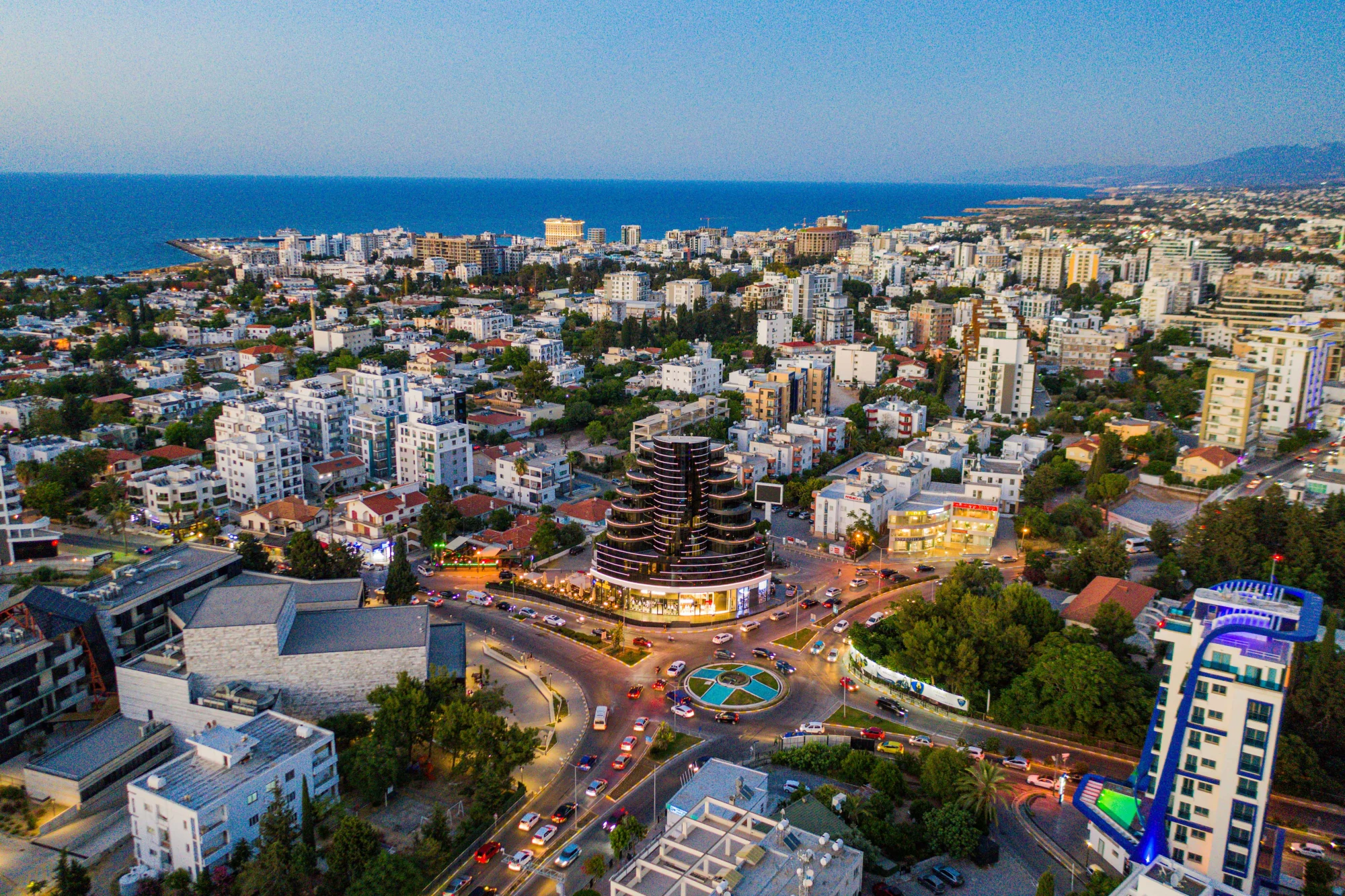
March in Northern Cyprus brought a mix of rising regional tensions, increasing living costs, and growing pressure on the local economy.
✉️ Contact me directly: +90 539 135 96 76 📲 WhatsApp: https://wa.me/905391359676
And today I want to walk you through what actually happened in Northern Cyprus this March because what you see in the headlines and what is really happening on the ground are two very different stories. If you were watching the global news this month, the Middle East has been on fire like a full Netflix level chaos. Missiles, drones, military movements, headlines screaming escalation, and then there is Cyprus sitting right in the middle of all this like, "Hi, I'm here." So, naturally, everyone started panicking because geographically, yes, Cyprus is right there. Not nearby, not kind of close, right there in the middle of the map where everything is happening right now.
And once you start seeing words like drone, military base, fighter jets, people don't think. People imagine worst-case scenarios immediately. Like we are one step away from turning into a live-action war documentary. But here is the reality. Northern Cyprus stayed calm. Life continued. And the biggest problem this month were not military, they were economic. So, today, let's actually break down what happened properly without panic, with no exaggeration, no dramatic music in the background, just facts with a little bit of humor. So, let's start with the part that scared everyone the most, which is the military situation. At the very beginning of the escalation, there was one incident.
One drone targeted the British RAF base in Akrotiri. And when I say incident, I mean one drone hit the base, but the damage was minimal. There was no casualties, and the rest of the drones were intercepted before they even got close to the island. And that was it. No second wave, no follow-up attacks, no escalation on the island. But if you open the news that day, it looked like Cyprus was under siege. Like we were 5 minutes away from evacuation and breaking news banners every hour. Now, here's where it gets more dramatic visually because suddenly, everyone started showing up. Greece sent F-16s to the island. France sent an aircraft carrier.
The UK reinforced air defense systems, and Turkey deployed six F-16s to the north and added Hisar defense system. And at this point, Cyprus didn't look like an island anymore. It looked like an international military exhibition. Like everyone brought their equipment just to park it and say, "We are here." And if you just saw the visuals with the ships, with jets, with the fast systems, you would think, "Okay, this is it. This is escalation." But in reality, nobody was here to fight. All of this was defense positioning and precaution just in case things got worse and the island needed protection. Even officials openly said the risk to Cyprus was very limited.
So, what you actually had was basically a situation where everyone showed up, but nobody actually wanted to do anything. Now, let's talk about what people actually felt on the ground because this is where the reality and headlines completely disconnect. At the very beginning, yes, there was panic. Flights were canceled, air routes were disrupted, and people started asking, "Should we even travel right now?" But here's the key point. This was not because Cyprus was unsafe or under attack. It was because of the airspace issues around Israel. Within about a week, everything stabilized. Flights resumed. Airspace stayed open. Tourism didn't collapse, and Cyprus actually ended up playing a different role now.
Not a danger zone, but more like a safe transit point in the region. So again, what looked like a crisis in reality was just a short-term reaction. And this is the part people often miss because while everyone was busy watching drones and fighter jets, the real pressure on the island was coming from something much less dramatic and much more painful, which is money. So, let's start with the inflation because of course we just have to. Official annual inflation in February came in at 40%, which already sounds awful, but then the real fun begins when you look at the things people actually need to survive. Rents went up by more than 56%. Basic food prices kept on rising hard, too.
Healthcare got more expensive, and entertainment didn't stay in behind. And as well as transport also joined the party like it had been waiting for its moment. So, technically, yes, annual inflation is at 40%, but in real life, the message feels more like, "Congratulations, your salary is now decorative." Living costs are climbing like they're training for the Olympics, and ordinary people are just expected to keep up somehow. Rents, by the way, is now fully behaving like a luxury product. More than 56% annual growth, and at this point, renting an apartment is starting to feel less like a securing housing and more like entering a premium membership club you never asked to join.
And this is exactly why real estate on the island is being looked at differently now. What used to be a nicely old place by the sea is now an income-producing asset because when rent grows faster than inflation, investors suddenly become philosophers and start saying things like, "Well, money should work for you." Easy to say when you are not the one paying the rent. Then, just in case people were still breathing normally, the parliament approved changes to registration fees and duties with an increase of around 86%. 86%, which is nearly double because apparently, somebody looked around and thought, "You know what this population needs right now?
More charges." Opposition politician criticized the lack of transparency, which is fair because when the government is about to reach deeper into your pocket, the least they can do is switch on the light first. But no, the vibe was very much, "Trust us now, suffer now, details will be later." Fuel prices also jumped hard, but that's mainly due to the shortage of oil supply globally. Petrol rose to 61 Turkish lira, and diesel rose to 60 Turkish lira. So, just in 3 weeks, it's plus 15 to plus 17 Turkish lira per liter. And that, of course, affects everything from food to services, too. So, while people were worried about war, the real battle was happening in the people's wallets.
The government started talking about preparing a package to contain fuel prices. While opposition figures asked the rather annoying but very important question, "Where exactly did the billions from the price stability fund go?" Because if you have a fund with a price stability in the name and prices are not stable, people do start wondering whether the funds was actually doing its job properly or just enjoying the retirement. Officials say that they are analyzing the situation weekly, which sounds responsible, but unfortunately, fuel prices do not go down just because somebody is analyzing them with a serious face. Meanwhile, one of the most painful economic side effects showed up in the dairy sector.
Producers say that the war in the Middle East has badly damaged exports, especially halloumi, which is not exactly a minor product over here. Exports to Gulf countries reportedly stopped. Sales to Turkey slowed down. Tourism weakened, and internal demand fell. And now there is too much raw milk and not enough market. So, while politicians are busy giving speeches, producers are sitting there with warehouses full of product and a very little reason to feel optimistic. Now, let's talk about something that actually affected everyone this winter on the island. And for once, it was not inflation, it was the weather. Honestly, we do not remember a winter like this in years.
This wasn't Cyprus-like, this was more of some kind of UK simulation. Constant rains, uh strong winds, flooding in some areas multiple times, and humidity that made your walls feel suspiciously alive throughout the last 3 months. And I'm not exaggerating, nothing dried. Uh clothes didn't dry, towels didn't dry, walls didn't dry, and mold basically moved in like it was paying rent. We barely saw the sun. Nobody wanted to go outside, and electricity bills went up because suddenly we were all running heaters like it's a full-time job. On the good side, though, the reservoirs are full now, and agriculture will definitely benefit.
And maybe, just maybe, cucumbers will calm down a bit, which would be definitely a bonus. But for Cyprus, this weather was a borderline offensive. But anyway, winter is finally over, and right now, everyone is waiting for the sun like it's a VIP guest who showed up very late, but we still desperately wait for. There was also a rare piece of news this month that did not make you want to scream into a pillow. A 47-year-old patient, after brain death was confirmed and with a family consent, of course, donated organs that helped to save four people. The heart and two kidneys were transplanted in Northern Cyprus and the liver was sent to Turkey.
The surgeries were successful, the patients are stable, and for one brief moment, the news reminded everyone that not everything on this island has to be a fight over money, land, or parliamentary ego. In the middle of all the madness, this was a genuinely powerful story. Now, let's talk about Carpas, because this one is a masterclass in how to turn development into a public outreach. On paper, the idea of university campus in a region sounded great. Investments, job growth opportunities, all the usual words that politicians love to throw around when they want something to sound noble. But, then people started seeing the actual size of the land involved.
And suddenly, it stopped looking like a university project and started looking like more like a somebody was casually building a second civilization. The proposed project involves around 6,000 donums of land, including state land, private land, and forest territory. Existing university in the country host tens of thousands of students on land areas that are many times smaller. So, naturally, people began asking the obvious question. Is this a campus or are we founding a new empire? And that question only got louder when it became clear that part of the project includes forest areas in one of the most environmentally sensitive regions on the island.
Environmental groups, walking clubs, local communities, and activists, more and more people started pushing back, saying the same thing in a different words. Education is great, but maybe let's not bulldoze nature into the ground while pretending it is a progress. Because that is the problem now. Nobody against development in principle. People are against oversized, underexplained, and suspiciously convenient developments, where laws seem to bend nicely around whatever project is politically fashionable. That is when trust starts dying and every new project smells bad before it even begins. On the Cyprus issue, uh things were not exactly inspiring, either.
Uh back in December 2025, leaders of both sides made a series of promises with a deadline stretching to the end of January of 2026. By March, a lot of those promises were still sitting somewhere between not implemented and maybe next week. Checkpoints still had delays, infrastructure remained unfinished, progress on halloumi export was still missing, and property-related concerns were still unresolved. So, the public reaction was basically, "If you cannot manage two crossings properly, maybe stop acting like a grand political breakthrough is just around the corner." There was at least one softer cultural moment with Ramadan by Ram approaching.
Families gathered, elders were visited, and children got sweets and pocket money. And for a short time, the island returned to something more human and warm. That is one of the most beautiful things about Northern Cyprus. Even when politics and economics are completely circus, ordinary people still keep traditions, family culture, and community spirit alive. There was also a wild herbs festival, which honestly sounded like the healthiest thing to happen all month. Music, crafts, food, village charm, local traditions, herb dishes, and folk performances along with lavender fields. Basically, the kind of event that reminds you why people fall in love with the island in the first place.
And thank God for that, because without these festivals, March would have felt like one long government announcement read aloud by someone increasing your bill in real time. At least the island still knows how to romanticize life while the economy is trying to bulldoze everyone. On the law enforcement side, police detained 38 people for illegal residency during nationwide checks. Customs also came in with full main character energy after undeclared wheels and tires were found in a vehicle at the border crossing, leading to a fine of 765,000 Turkish Lira, which is not really a fine anymore. That is a financial assassination. The message is crystal clear. The border controls are tighter.
Customs are watching, and trying your luck is becoming a very expensive hobby. So, yes, maybe now is the time to stop improvising with paperwork and import rules. And then, because much still had not reached maximum drama, the unions exploded. Major trade unions warned that if the government moved ahead with limiting the cost of living allowance, they would answer with an indefinite general strike. Teachers, municipal workers, telecom employees, customs workers, and doctors, suddenly, this was no longer some niche labor issue. It became a full-blown national standoff. Their argument was simple. Prices are rising.
People are already struggling, and freezing adjustments effectively means making workers poorer while pretending to manage the budget. The government response was not exactly soothing, either. They said, "If they do not do this, they may reach a point where salaries cannot be paid." Which is the kind of sentence that usually does not calm markets, citizens, or anyone with a blood pressure. What made the situation even uglier was is that after all the public talks, uh and negotiations, and dialogues, and meetings, the government still pushed the measure through by decree. That is where the whole thing stopped being just about salaries and started becoming a trust crisis.
Because once people think the conversations are fake and the decisions are already made in the backrooms, then the whole performance starts looking less like governance and more like a theater. Even the presidency reacted critically, saying the move damaged trust and institutional order. And honestly, that word again, trust, is the real story underneath everything this month. The economy is one problem, but losing public trust while managing an economic crisis is a much bigger one. And finally, because every good month needs a depressing final, the state internal debt has now climbed above 22.6 billion Turkish Lira. April is expected to bring major payments and more borrowing looks likely.
So, the government, like many households right now, is basically trying to pay old bills with a new debt and hoping nobody asks too many rude questions. The only difference is that when normal people do it, it is called stress. When the state does it, it gets dressed up as debt instrument or budget management. Same headache, but fancy vocabulary. So, overall, this was March in Northern Cyprus. Rent is up, prices are up, fees are up, debts are up, public anger is up, and the trust is down. Forests are under threat, unions are on fire, and the government is doing that classic thing where it says everything is necessary while the population tries not to lose its mind. Island life is still beautiful, yes.
Uh the sea is still stunning, the sunsets are still perfect, and the weather is still out here pretending none of this is happening. And that is your monthly reality check from Northern Cyprus. If you live here, tell me in the comments how this month felt from your side, because honestly, there is a massive difference between reading the headlines and actually living through the madness. And I will see you in the next one, assuming by then nothing has doubled in price.