Island guide · October 27, 2025
North Cyprus Voted for Change: Time to Buy or Sell?
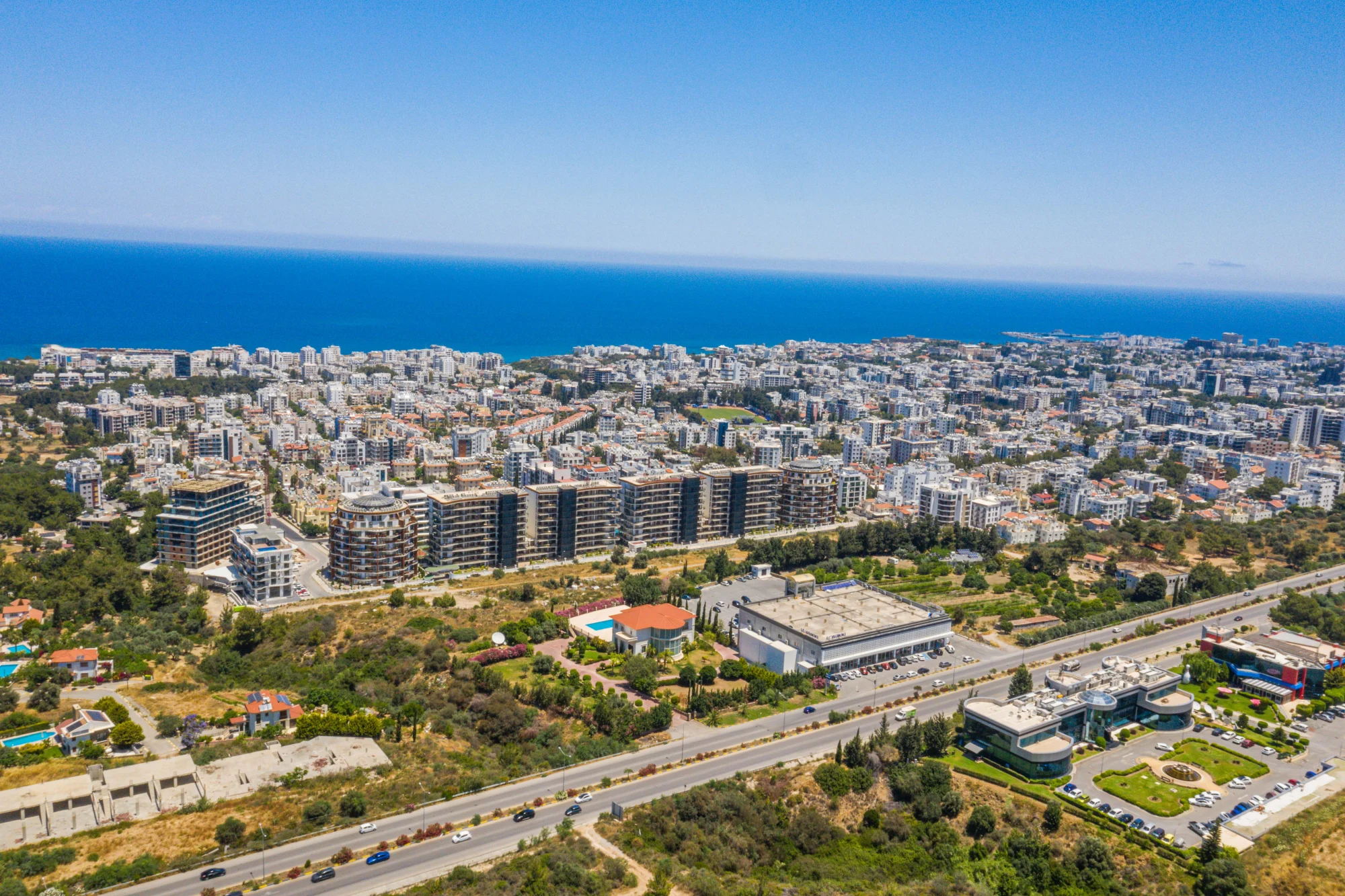
Tufan Erhürman won with 62.7%, signaling a major shift from a two-state solution to a federal model. What does this mean for property owners, buyers, and investors?
Got questions? Call or message me on WhatsApp → https://wa.me/905391359676
https://t.me/Mediterraneandream
⏳ Timestamps
In the past few days, the island's political map just flipped. The elections are over. And the winner has a completely different vision for Northern Cyprus. Some people are celebrating, others are panicking. My inbox full of messages like, "Maria, are they really going to take our properties away?" So, let's talk calmly and clearly about what's actually happening, what this election means, and what just noise and how it all might affect property owners, investors, and future buyers on the island. For many foreign investors, Europeans, Russians, Israelis, buying property in north has always meant freedom from European Union bureaucracy, taxes, and regulations.
But now with the political wind shifting, people are asking, "What happens next?" And the most radical questions I've received sound like this. Will my property be confiscated if the island reunites? Could I face legal issues for buying an occupied land? Will Greek criates reclaim properties in the north? And finally, what happens to my investors? Will it vanish overnight or not? We will look at what actually happened in election, why it matters, and how it fits into the historical context of Cypress, and most importantly, what it means for the real estate market and for you as an investor. Let's dive in.
On October 19th, 2025, Northern Cypress held presidential elections and the results were nothing short of historic. Tufan Erman, the leader of the Republican Turkish party, won a landslide victory with 62.7 of the vote. The incubatar received only 35.8% and the gap is nearly double. Voter turnout reached almost 65% higher than in the previous elections. That alone tells you something. People wanted a change. So who is Tuan Herman? He was born in Nikosia in 1970, a lawyer and a professor of constitutional law at Ankara University. He previously served as a prime minister of the Turkish Republic of Northern Cyprus in 2018 to 2019 and was part of the negotiation team in the UN le peace talk back in 2008 2010.
The key difference between the two candidates could not be more striking. Asintata, the outgoing president stood for the two-state solution. Complete separation between north and south. His time in office was marked by deep economic challenges. The collapse of the Turkish lera, soaring inflation and shrinking middle class.
Tufan Erh Hurman on the other hand advocates for a federal cyprus renewed dialogue with the south international engagement and rebuilding economic stability and what's important after his victory made a statement that calmed some of the early panic he said and I quote foreign policy will naturally be conducted in close consultation with Turkey no one should worry in other words this is not about breaking away from Ankara it's about balance moving from isolation to a dialogue and that's why this result is being seen as a pragmatic shift not a radical revolution for investors that distinguishes critical because this election was not about ideology it was about competence transparency and people's desire for normaly now let's talk about historical background and how we got here to understand why these elections matter so much we need to take a short trip back in time because the division of Cyprus didn't start in 1974 that was only the breaking point of a story that begun centuries earlier.
Let's rewind. 1571, the Ottoman Empire takes Cyprus from the Venetians. Now, this might sound like another invasion, but for many locals back then, it actually came as liberation. The Venetian rule was harsh. High taxes, forced conversions, and strict bans on Orthodox worship. The Ottomans introduced the millet system. Local communities could now govern themselves. The Orthodox church regained its freedom and Greeks and Turks lived side by side for nearly 400 years in a multicultural society. Then came 1878 and with it the British and that's when things started to change dramatically. Britain as always applied its favorite colonial principle divide and rule.
They separated education for Greek criates and Turkish criates. Greek children now were taught they were hers to ancient Greece dreaming of a nosis which is union with Greece. Turkish secret children on the other hand were taught about their bond with Turkey. So even from school days the two communities were growing up in two different worlds. Police recruitment and the Eioa period. From the start of British rule the police force in Cyprus was recruited largely from the Turkish criate community. The situation sharpened in the 1950s during the Ioka uprising when many Greek criates refused to join the police, viewing it as a tool of colonial control.
In response, the colonial administration relied on roughly 4,000 Turkish criate officers and created the Special Mobile Reserve SMR, a unit composed exclusively of Turkish criates tasked with counterinsurgency operations. This approach quickly gave the conflict a communal character. Greek criates narratives accused the British of divide and rule, arguing that London was using Turkish criates neighbors to suppress the Greek criate majority. As historian James Cororum observed, the governor could hardly have done more to alienate Greek criates and push even moderates towards supporting Ioka. Targeted attacks on Turkish secret police and their families followed, prompting retaliatory unrest in towns.
In practice, colonial security operations acquired a clear ethnic dimension, deepening the intercomunal split and laying the underground for long-term mistrust. Then came 1950s in the struggle for independence. Greek criates wanted anosis, the union with Greece. Turkish criates fearing domination by the Greek majority called for taxim the partition of the island. Britain still in control leaned on Turkish criate police forces to suppress Greek nationalist movements that of course filled resentment. The conflict now stopped being about independence. It became ethnic. Then in 1960 Cypress formerly became independent but the new constitution was let's just say doomed for the start. The president had to be Greek.
the vice president Turkish and both had absolute veta power. The civil service had fixed ethnic quarters 70% Greek 30% Turkish and three guarantor countries which are Greece, Turkey and the UK all had the right to intervene if something went wrong and that wasn't recipe for peace. It was a recipe for paralysis. Three years later in 1963, the system collapsed. After proposed constitutional amendments reduced Turkish criate rights, violence erupted across the island. That December became known as Bloody Christmas. Entire Turkish criate villages were attacked. Hundreds of people were killed and around 25,000 Turkish criates fled their homes to lead in small militarized enclaves.
That was the true beginning of division. Not 1974, but 1963. And that's when the first green line appeared. A line drawn in green pencil across Nikicoia by British officer to separate the waring sides. On July 15th, 1974, a military coup completely changed the course of Cypress history. The event orchestrated by the Greek military genta known as the regime of the canel aimed to achieve a nosis, the complete unification of Cypress with Greece and its transformation into a Greek province. This ultra nationalist move carried terrifying implications. Greece already had a record of ethnic expulsions. For example, the Turkish population of Cree was almost entirely driven out in 1897 and 1898.
Many feared that if successful, the coupe would lead to the total expulsion or extermination of Turkish criates from the island. Those fears quickly turned real. Widespread violence erupted against Turkish criates living in enclaves since 1963. In villages such as Tochni, nearly all men were killed. In Marata, Santais and Ala, the entire population, including women and children were killed. These were not clashes. They were acts of fening cleansing. On July 20th 1974, Turkey launched a military intervention citing its right as a guarantor power under 1963 of guarantee. The declared aim was to protect the Turkish criate population from ethnic anhilation and to restore constitutional order.
The operation code named AIA resulted in Turkey controlling roughly 37% of the island. Around 220,000 people became refugees. Greek criates fled south. Turkish criates moved north. Families were torn apart and the island was divided into two. It was a human tragedy on every level. Yet, paradoxically, that same division brought an end to the intercomunal bloodshed. Since then, for almost 50 years, the island has remained peaceful, even if still divided. Then came 1983, the year northern Cypress declared independence as the Turkish Republic of Northern Cypress or TRNC. It's recognized only by Turkey, but functions as a separate state with its own government, parliament, and institutions.
2003 brought the first opening, literally for the first time in almost 30 years, people could cross the green line. It was a historic moment of hope. 2004, the Anand plan. The United Nations proposed a detailed road map for reunification. Turkish criates said yes. 65% voted in favor. Greek criates said no. 76 voted against. The plan failed and just days later the Republic of Cyprus, meaning the south only, joined the European Union. It was a very bitter irony. The side that voted against peace got European Union membership and the side that voted for it stayed isolated. The moment left deep scars on northern separate spirits and created long-term mistrust towards international promises.
After that came decades of political swings between hope and frustration. 2005 Mhmed Ali Salad a proederation reformist was elected president. 2010 replaced by Dervish Aeroglu a conservative favoring two states. 2015 Mustafa Akenjib brought back hope for reunification talk. 2020 since reintroduced hardline separation and now in 2025 the pendulum has swung again back towards dialogue. So yes, history on this island moves in circles and maybe this time it's a circle that will finally lead to a progress. international reactions and global context. So what happened after the election results came in? The world definitely noticed.
Within hours, congratulations started pouring in from both expected and unexpected places. The president of the Republic of Cyprus, Nikas Christ was among the first to react. He congratulated Tfan Hurman and said that he looked forward to working decisively for a fair and lasting solution to the separate issue based on European values. Of course, that's diplomatic language for let's talk again, but this time please mean it. From Anara, the reaction was calm and carefully worded. President Tibagan, even though Herman wasn't his preferred candidate, praised the election as an example of democratic maturity and said that Turkey would continue to protect rights and interests of Turkish criates.
This statement was important and it signaled that Ankara was willing to cooperate with a new leadership not confronted and that's key because any step toward negotiation has to move in sync with Turkey. International media also picked up on the story. The Reuters called the result a reflection of the Turkish Syria desire to end isolation suggesting that a Herman victory could breathe new life into peace talks that have been frozen for years. Bloomberg noted that the election revives hopes for dialogue and could help ease long-term political tension on the island. In short, the tone outside northern Cyprus was largely optimistic.
The United Nations, the European Union, and even the US State Department quietly expressed readiness to facilitate renewed dialogue if both sides agreed. Now, in diplomatic language, that's the equivalent of saying, "We are not holding our breath, but our phone lines are open." Of course, not everyone was thrilled. On the Turkish side, Delet Bakali, the leader of the nationalist MHP party, the Erdogan's long-term political ali publicly denounced the results. He called on Teran C parliament to reject any return to federation talks and even suggested considering full reunification with Turkey. And that's about as subtle as setting a fire to the peace table before the first meeting.
Meanwhile, across the border, hardliners on the Greek criate side were also skeptical. The nationalist alarm party said that the faces may change, but the policies remain Turkish. In their view, as long as Turkish troops remain on the island, real reunification is an illusion. So, we have once again the same paradox as before. Moderates on both sides, cautiously open to discussions, surrounded, of course, by loud voices pulling in opposite directions. But still symbolism matters. For the first time in years, both sides publicly expressed willingness to sit down again. And for Northern Cypress, that means renewed international attention, which believe it or not can also have an impact on the property market.
Because when the island gets talked about in global headlines, not because of conflict, but because of the elections, democracy and reform, it builds credibility. and the credibility is the first brick in the wall of investors confidence. Now let's look closer at what really happened inside northern Cyprus. Those numbers 62% for Tufan and Herman didn't come out of nowhere. This wasn't simply a vote for Federation. It was a very much a vote against the old system. For many citizens, the past few years have been exhausting. Prices of basic goods skyrocketed. Salaries lagged behind and the Turkish year collapse made everyday life feel like a running on a treadmill that keeps speeding up.
People didn't just want new slogans, they wanted oxygen. Under a sintata, the policy of two states sounded strong in theory, but in daily reality meant growing isolation, shrinking opportunities, and an economy that led almost entirely on Ankara. For a lot of Turkish criates who deeply value both their connection to Turkey and their own autonomy, it felt like losing their voice. So this election became a quiet rebellion, a way to say we want dignity and progress, not just slogans and subsidies. Tuener Herman appeal was very different. He is not a populist. He is a law professor, calm, articulate and methodical. People saw in him something they hadn't seen in years. A professional.
someone who actually knows how legal negotiations with the European Union or the UN work. Someone who can talk policy rather than poetry. And that alone earned him enormous respect, especially among the educated and urban voters. His campaign also focused on internal issues, corruption, transparency, cost of living, and these messages hit home far stronger than the world. In fact, when you talk to locals, most of them will tell you that they didn't vote for a political union with the south. They voted for stability, honesty, and competence. They want the government to manage inflation, create jobs, and make life predictable again. If international recognition or European Union dialogue helps, great.
If not, they still want functioning economy today. The mood on the streets after the election was almost festive. Cafes in Gua were full. People would talk in politics again, but this time with a sense of a cautious hope rather than frustration. It was a collective sight, the feeling that maybe, just maybe, the next few years will bring something more normal. And here is something interesting. Many young Turkish criates who had been planning to leave for Europe or the UK suddenly said they'd wait and see what happens next. And that's how powerful even a small change in political tone can be. When people feel that the future is at least being discussed seriously, they start imagining themselves in it again.
So internally this election wasn't just political, it was emotional. It was about reclaiming the confidence in leadership in the economy and in the idea that the north can be moderate, efficient and proud of its own terms. But what this means for property market, you would ask. Now let's talk about what everyone really wants to know. What does this election mean for the real estate market in Northern Cyprus? The short answer, my dear friends, it brings hope, but not without caution. Let's look at three possible scenarios. Scenario one, the optimistic window of opportunity. This is a dream version, the one every investor secretly roots for.
In this scenario, the election results trigger new talks between North and South. International isolation begin to soften and the confidence returns. With a friendlier image abroad, investors attention rises and so do the property prices. Analysts estimate that if meaningful negotiations resume and the island heads towards any form of unification or mutual recognition, property prices in the north could increase by 50 to 150%. Why? Because properties here are still roughly half the price of comparable homes in the south. For example, a frontline apartment by the sea in northern Cypress might cost you €120,000. While on the southern side, the same property sells for roughly about €250 to €300,000.
If a market ever came under a unified legal framework, banks would begin offering mortgages. More international buyers would enter and the liquidity would explode. This is the best case scenario, of course, but also, my dear friends, is the least likely one. But still it shows the potential ceiling of what could happen if politics and economics finally align. Scenario number two, the realistic careful stabilization. This is what most experts expect. Negotiations might restart but slowly with no major breakthroughs for years. Even without full reunification, the tone will be softer, diplomacy will be more civil, and the media coverage more positive.
That alone would attract more tourists, increase long-term rental demand, and bring a steady 5 to 10% yearly growth in property values. The government of Northern Cypress already sees the real estate as a key economic driver. They recently allowed foreigners to purchase up to three properties instead of one and they reduced the title transfer tax from 12% to 9. These steps clearly show that the authorities want to keep the investment flow strong. Under at Herman, we can expect this trend to continue perhaps even with more transparent regulations and easier property registration. So this scenario means stability, maybe not a miracle, but no chaos either.
For buyers, it's actually one of the safest environments, predictable, steady, and long-term oriented. Scenario number three, the conservative status quad. And finally, the most probable one. Despite all the new optimism, the fundamental reality might remain exactly the same. Northern Cyprus will keep appating as it has for years, independent in practice and recognized only by Turkey, but fully functional for those who live and invest here. The two-state idea might not vanish overnight and the Herman's government, even if more open to dialogue, will still rely heavily on Nankara for financial and political support.
Turkey, after all, has poured billions into the northern economy over the decades and considers northern Cypress a matter of national identity and security. So, a sudden withdrawal or radical change, of course, is practically impossible. But for the property market, that's not necessarily about news. The local economy will keep developing. Infrastructure projects, new highways, hospitals, universities, and marinas are still expanding. The digital sector is growing and the real estate market will remain one of the most attractive in the region for affordable costful living. So my dear friends, in summary, if unification somehow happens, prices will skyrocket.
In case diplomacy continues, slow and healthy growth is expected. If nothing changes, the north still stays as one of the most peaceful, safe, and undervalued coastal regions in the Mediterranean. Whichever way the politics go, the sea stays blue, the mountains stay green, and the demand for a piece of paradise doesn't really stop. Now, my dear friends, let's take a step back and look at the bigger picture. Because despite all the excitement and headlines, the truth remains. The status quo is the most stable and realistic scenario. And that's not necessarily a bad thing. The Cypress issue has remained unresolved for over 50 years. And there is a reason for that. It's not just politics.
It's a complex web of history. identity and security that no one can untangle easily. The fundamental problem is that both sides want peace but they want different kind of peace. Greek criates want a unitary state, a single government and a full control over the island. Again, Turkish criates on the other hand insist on political equality and guarantees of safety, which means maintaining Turkish protection and autonomy. And honestly, if you still talk to an ordinary Turkish criate, many still remember stories from their parents or grandparents who lived through violence in 1960s and 70s. Some lost homes, some lost family members. So for them, the Turkish military present isn't just a political issue.
It's emotional, even existential. It represents security. And without that sense of safety, no one here will agree to unification. There are also practical, almost impossible issues to solve. the property question. Over 200,000 displaced Greek criates still have claims on land in the north. To compensate or return all those properties would cost billions and create massive legal chaos. Then there is presence of Turkish settlers, the territorial disputes and the fact that the Republic of Cyprus is already a full European Union member using its veto power in Brussel to block any initiative that might benefit the north. And finally, there is a deep cultural divide.
Two generations have now grown up separately under different system, currencies and education. Reuniting them would be like trying to merge two completely different countries overnight. It's just not realistic. So when we put all of that together, it's clear why the status quo, even if imperfect, is the only viable path for now. And in many ways, that's what actually makes this market stable for investors. And here's my honest advice. If you are thinking about buying property in Northern Cypress now, this is still a very good time, but only if you are ready to play a long game. Prices are still low compared to the south or to any other Mediterranean region.
The infrastructure is improving, tourism keeps expanding, and foreign demand remains strong. You can find great properties, especially resale homes in Turkish title or exchange title properties that offer real ownership and clear documentation. But do not expect a quick flip. This market rewards patience and 5 to 10 years would be the optimal one, not one or two. If you are buying for living, it's a perfect choice. Uh if you are buying for rental, I would say long-term rentals give you steady returns, usually between six and 8% perom. And if you are buying for speculation, be prepared for volatility. So my dear friends, approach this market with knowledge, professional guidance, and realistic expectations.
So let's wrap this up. In October 19, 2025, Northern Cyprus voted for change, a more balanced foreign policy, an economy focused on transparency, and perhaps a fresh attempt at dialogue. But real change, especially on this island, takes time. For the real estate market, the message is simple. The fundamentals are strong, investors interest is growing, and the region remains one of the most peaceful, affordable, and naturally beautiful places in the Mediterranean. If you're already here, relax. You're in good hands. And if you are planning to buy, do your homework. Work with a trustworthy agent and doublech checkck every document.
And most importantly remember the best investments are not the ones made in rush but the ones made with clarity, knowledge and bit of patience. I'll be following all updates after the election so you won't miss anything important. But until then, stay safe, stay smart, and as always, invest with heart and with reasons.