Island guide · October 4, 2026
Zero Crime, Zero Tax… So What's the Catch? Northern Cyprus A–Z
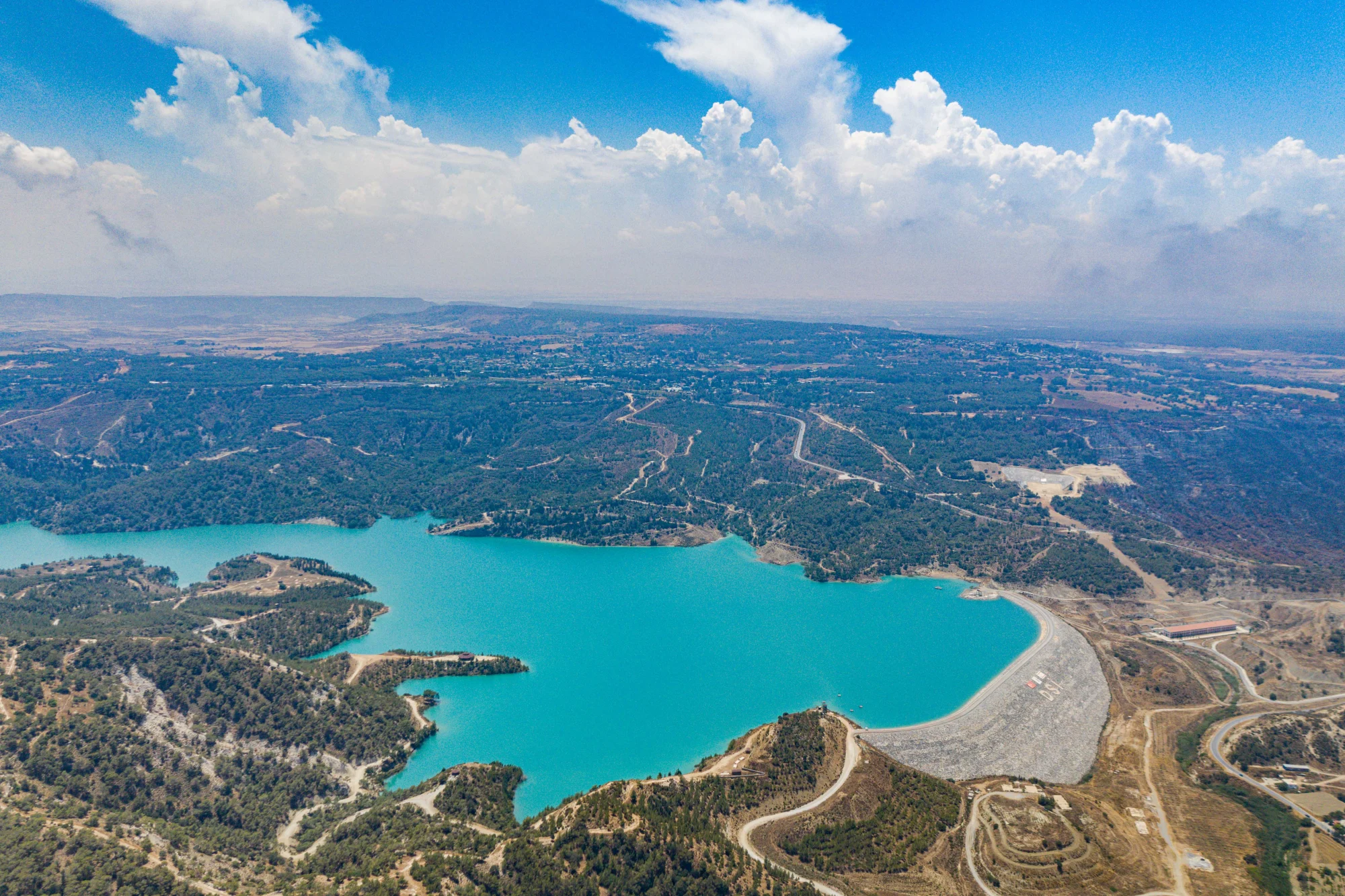
Why you might have to break up with steak. Why stealing a shaver here is the worst career move of your life. Why "360 days of sunshine" is a beautiful lie.
Where your money goes untouched, why crypto feels right at home, and the one tax that might actually make you laugh. Also, the job market. Bring tissues.
TIMESTAMPS
Figures are based on my own experience and the rules at the time of filming. Taxes, minimum wages and residency requirements change, so always double-check before making decisions. This is not legal or financial advice.
📩 DM me today for a FREE consultation:
✅ +90 539 135 96 76
📲 WhatsApp: https://wa.me/905391359676
#NorthernCyprus #MovingToNorthernCyprus #KKTC #Kyrenia #LivingAbroad #ExpatLife #CyprusProperty #RelocationGuide
So now let's talk about the basics because those are the questions that I hear from people every single day. First of all, let's talk about why people choose Northern Cyprus. And the first one, of course, would be climate. When they tell you that there are 360 days of sunshine per year, it's not exactly true. I would say that January, February are generally a little bit colder months where the temperature can go down to plus 17. Even though it can be sunny, it can be chilly at the same time because we're located by the sea front. And at nighttime, it can be as chilly as plus seven, plus 10 degrees for a month at least. You know, there are years that are warmer, there are years that are colder.
Let's say the last year was an exceptional year for us. We had at least 30 days of rain practically in a row, and that's very unusual in Northern for Northern Cyprus. It was an exceptional year, but those years can happen again. So bear that in mind. Northern Cyprus climate is amazing. I mean, we've got at least 10 comfortable months in a year. Second reason why people pick this particular place is their safety. And when I'm saying safety, I'm not exaggerating. We have virtually zero crime. The types of crime that we do have in here is the traffic violations, okay, such as drink driving or accidents. They do happen because people come on their vacation and they like to drink beer.
We do get quite a bit of news about violence within the household, but it's all due to the hot temper of the nation, right? And of course, when it's within the family, it's within the family. There's nothing there is not much we can do. There's been couple of times when people go into the house and stole belongings, but it's very rare case and those people get tracked immediately. Generally, crime in Northern Cyprus being discovered in no time, the police tracks them down within a day or two max because Northern Cyprus has and every single corner. Police has access to all of those street cameras, even though if they are privately owned, it doesn't really matter. Police has access to it.
And because island is small, you cannot get lost over here. You get tracked very easily. We had cases where people stole 300 Turkish Lira from the cash point and then got arrested a year later when they returned to the country. We had a case where a tourist stole a shaver, electric shaver from a store and got arrested two years later when he came back to the country. You just can imagine that any type of household robbery, if it even does happen once in a blue moon, it gets discovered, uncovered almost immediately.
There is no homeless people outside, there is no beggars outside, there is no refugees, there is no people under influence that you can spot outside on the streets that would cause you inconvenience. There is a zero tolerance to things like disrespect or abuse or racism. So if anyone is being disrespectful to anyone outside on the streets, there is a very high chance that you're going to get deported. So needless to say, it's a very safe environment where you can walk out of your house at nighttime by yourself and go by the seafront without fearing that anyone is going to approach you or harm you in any way. English widely spoken, it's a second language.
I'm not against saying that everybody and anyone speaks English over here. No, there are, you know, institutions and municipalities where people would struggle to speak English, but normally there would be one or two people working in the same department that would be able to attend to you and solve the issues that you have. There are British schools, there are accredited British schools such as English School of Kyrenia or Nejat British College, Near East. You know, all of those schools teach kids in English. Couple of subjects in some of the schools might be taught in Turkish, which are considered to be a benefit because Turkish is a widely spoken language as well.
You know, many countries speak with similar dialects, so it will benefit your kid in a nice way. Although I do have to tell you that private schooling is not overly cheap in here. The rough estimate figure is about 10,000 per year. So the younger your kid is, the cheaper their tuition fees. So let's say for the younger years, it would be probably starting somewhere around 7,000 pounds and then towards the final grades, the fee can approach up to 10,000. I wish I could say that Northern Cyprus is cheap. Well, it used to be back three, four years ago, but not anymore, my friends.
It's certainly cheaper than the majority of European and Western countries when it comes to cost of life, but it's not a bargain price anymore. Things like activities are a lot cheaper over here. Needless to say that you can attend beach fronts for free. You don't have to pay for it on some of the locations. Second of all, when it comes to diving or things like yachting. As an example, let's say yachting. My son attends classes and for four classes per month, every single Saturday for a few hours each, we only pay 2 and 1/2 thousand Turkish lira, which is 50 euros.
Things like dancing classes or yoga classes or any, you know, fitness centers, like those kind of things that are very accessible over here, whether it's for the adult or the kids. Let's say a couple that doesn't have kids that need to attend private schooling would roughly need about 2,000 euros per month. And what's important that 2,000 euros would be enough if they have their own property to live in, if they have their own car to get around and they don't need to rent one.
And those 2,000 euros would cover, of course, the grocery bills, you know, with full of protein and veggies and fruits without anything extraordinary and probably with some sort of limitation on a red meat because red meat is the most expensive product in Northern Cyprus. It's double the price than it is in Europe. I'll be honest. Fish is cheaper, chicken is cheaper. Any other protein alternative like nuts, you know, and beans, they would be cheaper, but red meat is extremely expensive over here. 2,000 euros is the grocery bills. It's, you know, a few visits to the restaurants per month.
It's the utility bills, including the internet, the electricity, unless you live in a mansion and you consume hell of electricity. You know, the moderate bill that would be included in 2,000 euros when it comes to the electricity. The water, the taxes are your property, Any type of fees that your car might require, including petrol. If there is a kid that needs to attend private schooling, that would be another €1,000 on the top per month. If you need to rent a property, you roughly add another €1,000 per month. If you need to rent a car, that's another €600 or €700 per month for you. All in all, the minimal budget with your own property and your own car is €2,000.
The comfortable budget where you don't have to say no to yourself every single time is going to be €3,000. With one kid, it's €4,000. With two kids, it's €5,000. Northern Cyprus is not as affordable as it used to be and without having substantial savings or some sort of regular passive income or active income, let's say remote income, you would not be able to support your living over here. And another important thing is that please do not rely on job markets in Northern Cyprus to support your living. Why that is? Because well, we don't have corporate organizations over here or global corporations in here that hire professionals. That's one thing. Because Northern Cyprus is not recognized.
Second of all, you know, any sort of government job is taken by the locals because they're highly paid jobs. And of course, all the locals they know each other. It's a family of a friend of a friend of a relative like or the government would only mainly employ local Cypriots unless there is some sort of skills that you can provide that cannot be acquired in the local market. Popular jobs among expats can be teaching. I've had quite a few friends that used to teach kids at private schools, but still it's going to be like a minimum wage of €1,500 per month. Another option would be a casino, but you would need to speak a few languages. It's not a high paid job either.
It's roughly probably about somewhere €2,000 per month and it's a very tough type of job with a very difficult schedule because you would need to work night shifts at the same time. And of course, any sort of minimum paid job, you know, such as grocery shops or waitering or anything else like that, that's not going to get you anywhere. That's just uh to cover your basic living expenses. And since we've spoken about job, let's talk about the financials. One of the biggest attractions for Relokance to Northern Cyprus.
If you've taken a residency of Northern Cyprus and you live here permanently, and let's say you have a remote type of job, if you run some sort of services online or you're employed by other company or you get your pension being transferred to Northern Cyprus, basically any money, any income that is made outside or online of Northern Cyprus is not taxable by law. And let's say if any sort of money from abroad entering your bank account, whether it's another person transferred the money, whether you know, it's uh for the services that you provide online, local banks would never ask you any questions with regards to where those money are coming from. They would never ask you to pay any taxes.
They would never withhold any sort of percentage. So your money is your money on the island. Another financial matter is the crypto because crypto is widely traded over here. If anything, I think we have more crypto offices than bank branches across the island. Crypto exchange offices is very common over here. You know, all of them are legal, all of them operate under current regulations. Any type of form of assets that you hold back home, whether it's crypto, whether it's cash, whether it's a bank account, whether it's corporate bank account, there is always a way how to transfer those funds over here with less or very little loss on the percentage for the transfer.
It's absolutely safe, it's absolutely legal, and that's very important. If you require any sort of consultation on how to transfer your assets to Northern Cyprus, just DM me and I'll provide you with the relevant contact. So if you're a crypto enthusiast, that is a heaven for you. No restrictions, no taxes being applicable, no limitations. You can freely trade being on the island.
For people who are not really into crypto, who doesn't trust this instrument or you know, have some sort of doubts and heard about too much scam, you know, the companies that do provide this sort of service, they provide it Let's say, you have your assets back home in whatever form they are in, and then you're sitting in the office in here, and let's say the amount agreed, they will have cash in front of you that they will hand over to you as soon as they get hold on of your assets back home. So, it's an immediate type of transaction. You don't have to do it over the phone, you don't have to do it online, you do it at the office where you are sitting. So, that's the only safest way to do it, of course.
So, once again, pension is not taxed, your income is not taxed, your remote earnings are not taxed. No, your passive income is taxed. If you have the property in Northern Cyprus and you are renting it out, you actually have to pay taxes on it. So, basically the only thing that you need to pay taxes on in Northern Cyprus is the property tax. If you own a property, the property tax is about three Turkish Lira per square meter. If it comes up to like 50 or 70 Euros for an apartment per year, that would be a big figure. Aside of road tax, okay, road tax are paid 4,000 Turkish Lira, which is 100 bucks.
Of course, if you are physically working over here for some sort of company, well, first of all, you need to have a working visa, a relevant working visa, that's first thing. And second of all, your employer is going to be paying taxes for you, which is would be equivalent roughly to 200 Euros per month on the minimum wage. If you have property in here and you rent it out long term, you have to have those rental agreements with tenants registered at the tax office. And if you are getting income in a foreign currency, then you'll be paying 13 percent tax on your earnings.
If the tenant contract is stated in Turkish Lira and you receive the funds in Turkish Lira, then the rates applicable for the taxes is 8 percent. If it's short-term rental, it's the same percentage, but there is licensing fee applies that would roughly be around 200 Euros per year for one property. The biggest advantage of Northern Cyprus is the Mediterranean Sea. Oh my goodness, Mediterranean Sea is the best sea I have ever experienced in my life. First of all, it is very warm, especially during summertime, and then it stays warm until up till November, up till November. I mean, we have enthusiasts in here, British region and Russian region, right, that swim during winter time, even at winter season.
The temperature of water does not go below 20°C. During summertime, the temperature, the regular temperature would be 27 and during the hottest season, it goes up to 30. So sea is extremely warm over here. It is also very clean, but it depends on the location. The less people live in a particular location, the cleaner the sea is. So in places like Kyrenia or Karpas, locations where not so many people swim or not so many housing is being built, the water is generally cleaner. Another taxes that you need to pay in Northern Cyprus is the property tax that you pay on the purchase of your property.
In case you decide to buy a property in Northern Cyprus, you would have to pay 9 and 1/2% tax, a lot of the times on the cadastral value, sometimes on the contract purchase price. Basically, this tax is being split into two taxes, 6 and 1/2% at the moment of registration of your property with the title and 3% tax on the title deed transfer. Sometimes those 9 and 1/2% when you add 6 and 1/2 and 3% is being paid on a full amount price, sometimes on a cadastral value. It depends on what kind of property you get. If it's property off-plan or brand new where VAT has not been paid yet by the first owner, then you will have to pay another 5% on the top of that 9 and 1/2%.
So for the new properties, the total tax would be 14 and 1/2%. Again, 6 and 1/2% at the moment of the purchase when you register the contract and 3% plus 5% VAT would be paid on the title deed transfer approximately a year to 3 years from the purchase date. That's a very significant cost that you would need to encounter for. The only good news is that if it's a resale property, you know, with the title deed being on the owner's name, a lot of the times we have the opportunity to reduce the taxes payable because you don't have to pay the VAT. That's first thing. And second of all, because those taxes are being paid on the cadastral value rather than the purchase price.
If you need consultation in that regard or full breakdown on the taxes that you would need to pay on a particular property, DM me and I'll provide you with the calculations. And what would be the prices for the properties in Northern Cyprus? Well, the lowest ticket that you can enter Northern Cyprus with is £50,000. For £50,000 you are able to get a studio. If it's a ready to move in studio, then it has to be a full down payment. If it's a under construction studio, you will be able to pay out that property price within about 3 to 4 years with a payment plan zero of interest. And that would be the cheapest price, not a regular price.
To get yourself a comfortable property in Northern Cyprus of two bedroom in a desired location of a good quality and a good documentation, then you would need to count for at least £150,000. That would be an average ticket for a regular type of property, nothing exclusive. Is it easy to adapt in Northern Cyprus as a foreigner? Well, I think the easiest way would be to integrate into your own community. If you are coming from the Great Britain, there is plenty of Facebook groups. There are plenty of communities and chats and group chats that you can enter and come across people and usually all of the expats are very helpful.
So if you come across people of your own nationality in the region, trust me, those people will help you out. They'll answer any of your questions. They will share their experience. Of course, it's challenging for the first couple of months because you need to figure out how to pay for the electricity, how to open a bank account, how to get a residency, find your way around and where the cheapest groceries are and all of that. It is going to be challenging for the first month or two, but those challenges are going to be gone after you manage to navigate your way around and figure out the basic stuff. Another thing is just Northern Cyprus is very slow. When it comes to the services, they're slow.
When it comes to the documents, it's the bureaucracy. Nobody is in a rush anywhere. It's like me living in here for 4 years, I'm already used to it and I'm taking I'm trying to take it slow myself, but for some people that come from the past past paced environments where everything has to be done immediately, they might find that relaxed atmosphere very annoying. Well, it's something you either have to get used to, otherwise it will keep on irritating you. I'm pretty sure on other islands or Greece or Tenerife or Spain altogether, you know, it's the same thing. People are very slow at doing stuff and it is normal for locals.
In my personal opinion, I would say this island is very suitable for the people that have already established themselves in life. They already know where they are going to, what they are doing to make their living. They want to slow down, they want balance in life. For people that want to find more time for their own selves, you know, going into sport, meditate more, walk more, exercise more, or maybe learn some sort of type of dance, you know, like tango or Latino dance. You know, it's for people who are ready to compromise the work with a balance in life.
And for young individuals that still need to establish themselves in a career, you know, grow their expertise, establish connections, gain knowledge and experience, this island will probably not be suitable because as I mentioned before, there is no corporations, no employment places for the youths that need to grow their experience and expertise. Of course, when people relocate to Northern Cyprus, they don't immediately know whether they want to live here permanently. And for that reason, they decide not to buy a property just yet, but to rather rent for a year or two prior they make sure they want to stay here for good.
So if you decided to come to this island, explore the living, see if you can adapt, you know, see whether you like it. Then one of the straightforward residency pathways would be acquiring residency via high income. What does that mean and what does it require? Basically, you need to secure a rental, preferably for a year term. Secure a rental in the form of a tenant agreement, right? That you rented a property for this amount of money and that agreement has to be registered with the tax office. Aside of that rental agreement that's registered with the tax office, you would need to maintain 36 minimal wages on your bank account as proof of that you can financially support yourself.
36 minimum wages in Northern Cyprus is roughly equivalent to €46,000. It can be for one individual person, it can be for a family, it doesn't really matter, it's enough. But basically your tenancy agreement registered with the tax office, your €46,000 on your bank account as a proof of funds so you can financially support yourself, then any birth certificates and marriage certificates if you come here as a family. Translate it into English and notarized. And aside of that, you will need to get a mukhtar letter. It's basically a certificate of your residency from a mukhtar individual.
It's basically a main person in your region that's going to give you that letter based on your tenancy agreement that is registered with the tax office. And of course, your passports. All of those documents combined, you get them scanned and you would also need a few passport-sized photographs for each of the applicants. Basically, the main applicants can be a husband and a wife and then kids, they go under. You include them into the application online, but they don't actually get physical residency granted for themselves. They're they're being attached to the application of the parents. So that's all you need for the residency based on a rental agreement as the high income residency as we call it.
Uh if you've decided to relocate to Northern Cyprus, even if it's temporarily to see whether you're going to like it and you don't want to waste your money on rental because let's face it, for a year it's going to be like €12,000. So if you don't want to lose your money on rental and you decided to buy the property even though if you don't like it, you will have to sell it later on, then my advice to you would be to buy a property in the locations that are in high demand, which I speak about, which is west side of Kyrenia. It's the most liquid type of market when it comes to the property.
We have the smallest stock of resales and it's the most demanded market for purchasing the property or renting the property by foreign national that come here with kids. Then in that case, what you would need? You would need to purchase agreement of your property that's again being registered with the tax office and taxes of 6 and 1/2% being paid. There has to be an application for the title deed transfer submitted and you will have a QR code. So that would be a second document to attach to your purchase agreement that's registered with the tax office. Aside of that, of course, you would need your passports, you would need any birth and marriage certificates again translated to English and notarized.
You would need a mukhtar letter, the same thing, and you would need a bank account with 12 minimum wages on your bank account. If for high income residency here, when you don't own the property but you rather rent it, you need to maintain €46,000 on your bank account. In this case, when you own a property but you don't have the title deed on your name just yet, you need to show €15,000 on your bank account, which is going to be enough for the whole family. So it's three times as less. In a year or two, once you get the permission to transfer the title deed into your name and you can secondly transfer the title deed into your name with 3% taxes being paid for the title deed transfer.
After that, you don't really need to show the proof of funds at all to the immigration office unless they ask deliberately. And the length of the residency that you can apply for is basically a minimal term of half a year or maximum term of two years. The last thing I want to mention is opening a bank account. It is very easy and straightforward when it comes to the local banks. Local banks are Vakiflar and Credit West Bank. Open a bank account with your foreign national ID and proof of your address here in Northern Cyprus or back home. As a proof of your address can be any sort of bill, but it has to be translated into English.
You would need to deposit €1,000 on your bank account just to open it, but those money are fully yours. For the Turkish banks located in Northern Cyprus, the requirements are a bit stricter and you would actually need to show the proof of your residency in Northern Cyprus. That's pretty much everything that I wanted to say for today.